

Guided course - 5 chapters
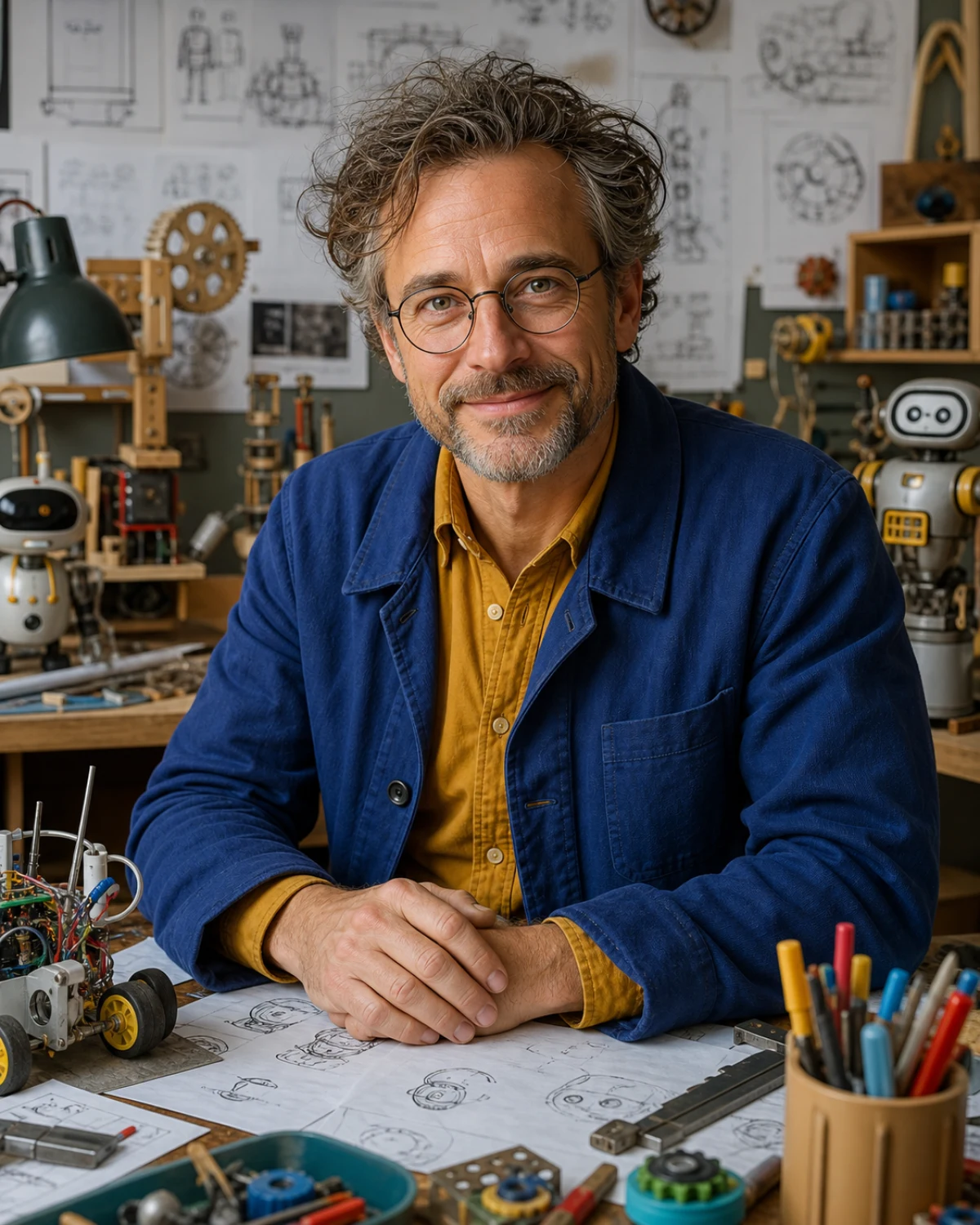
Responsible Invention and Prototyping: A Practical Course with Dr. Elias Voss
Dr. Elias Voss teaches Responsible Invention and Prototyping through five practical chapters that move from a clear foundation to guided work, applied decisions, and revision. You will finish with an evidence-based interpretation and short presentation, a tutor-ready capstone, saved notes, and a repeatable way to continue practicing.
Your course progress
0 of 5 chapters complete
0%Sign in is required to save progress, checkpoint answers, and notes. Sign in to continue.
What you will learn
Build knowledge, use it, and leave with evidence of progress.
-
 Explain the essential Responsible Invention and Prototyping vocabulary through a connected mental model.
-
Follow and explain a reliable evidence-based interpretation workflow in guided practice.
-
Apply Responsible Invention and Prototyping to a realistic scenario with visible constraints and tradeoffs.
-
Evaluate and revise an evidence-based interpretation and short presentation using evidence-based success criteria.
-
Complete a capstone and leave with a specific next-practice plan.

Before you start
- No specialist background is required
- Bring curiosity and a willingness to revise a claim when evidence changes

Useful materials
- Notebook or annotation tool
- A short text, map, image, or oral account
- A simple source-comparison table

Suggested rhythm
Complete one 30-minute chapter at a time: learn for 10 minutes, practice for 15, then use 5 minutes for the checkpoint and notes.
Course capstone
Responsible Invention and Prototyping interpretation brief
Answer a focused Responsible Invention and Prototyping question using contextualized evidence and present the strongest alternative interpretation fairly.
What you will submit
- A focused inquiry question
- An annotated evidence set
- A short argument plus alternative-view paragraph
How it will be reviewed
- Evidence is relevant
- Context changes the interpretation
- The claim is qualified and defensible
- Alternatives are represented fairly
Course chapters
Learn, practice, check, and record what matters.
-
Chapter 1
Responsible Invention and Prototyping: Foundations and vocabulary
Build a dependable mental model for Responsible Invention and Prototyping before trying to memorize isolated details. You will define the essential vocabulary, inspect a worked example, and turn the ideas into a reference you can actually use.
Learning objectives
- Explain the purpose of Responsible Invention and Prototyping in your own words.
- Use the chapter vocabulary accurately in a short example.
- Distinguish a strong example from a common misconception.
- Create a compact reference for later practice.
Key terms
1 Start with the purpose
Place Responsible Invention and Prototyping inside a text, map, argument, event, or community account that can support more than one interpretation. Name the result a learner is trying to produce and the constraints that make the skill useful.
2 How Responsible Invention and Prototyping actually works
These are the load-bearing ideas. Everything later in the course is an application of one of them, so it is worth reading slowly and returning to when something stops making sense.
- An argument needs a claim someone could dispute. A thesis that nobody would contest is a summary, not an argument. Testing whether a reasonable person could disagree is the quickest check on a thesis.
- Evidence must be interpreted, not merely quoted. A quotation does not argue for itself; the analysis after it carries the reasoning. Most weak paragraphs stop at the evidence and skip the interpretation.
- Sources carry the perspective of their makers. Every document was produced by someone, for a purpose, at a moment. Reading for that context is what separates historical analysis from repetition.
3 Misconceptions worth clearing early
Each of these is common, understandable, and expensive to leave in place. Recognising them now saves rework later.
- Summarising the text instead of arguing about it. Retelling is easier and feels safe. Fix: Ensure every paragraph makes a claim the text supports rather than reporting what happens.
- Dropping a quotation without analysis. The quotation seems self-evident. Fix: Follow every quotation with at least one sentence explaining how it supports the claim.
- Treating a source as neutral because it is old or official. Age and officialdom read as authority. Fix: Ask who produced it, for whom, and what it leaves out.
4 Build the mental model
Connect the key terms as a process rather than a word list. Use this sequence: ask a focused question, inspect context and evidence, compare interpretations, and make a qualified claim.
5 Catch the common miss
Compare a surface-level attempt with one that shows relevant sources, contextual awareness, a defensible claim, and fair treatment of alternatives. Explain the single difference that matters most.
Visual modelResponsible Invention and Prototyping at a glance
Use this map to connect the purpose, vocabulary, example, and quality check before memorizing details.
Side-by-side comparisonTwo readings of the same source
Both attempts look plausible from a distance. Toggle the highlights and study where they part ways.
Aspect Quote-hunting reading Contextual reading Evidence A line lifted because it matches the thesis The line read inside its time, author, and audience Claim Stated as the only possible reading Qualified, with the strongest rival reading treated fairly Support One source, cited repeatedly Independent sources that corroborate each other A claim that survives its best rival is worth ten that never met one.
Practice roundMatch the Responsible Invention and Prototyping vocabulary
Tap a term, then the definition it belongs to. Wrong guesses cost nothing but honesty.
Retrieval beats rereading: pulling a definition from memory strengthens it far more than recognizing it on the page.
- Clear the board once, shuffle, and beat your attempt count.
- Say each definition aloud before tapping — then check yourself.
Practice activity - 12 minMake a one-page field guide
Create a compact field guide that would help a new learner recognize and begin using Responsible Invention and Prototyping.
- Write a one-sentence definition and purpose.
- Add the four key terms with a plain-language example.
- Include one non-example and explain why it misses.
- Finish with a three-step starter checklist.
DeliverableOne annotated page or slide that can be reused in later chapters.
Success looks like- The definition is specific.
- Examples match the vocabulary.
- The checklist is usable without extra explanation.
Knowledge check1 questionWhich response best shows a usable foundation in Responsible Invention and Prototyping?
Not startedSign in to save chapter notes to your account.
-
Chapter 2
Invention history and systems thinking: Guided demonstration
Follow a complete Invention history and systems thinking example from setup to result, pausing at the decisions that experts often make silently. Then repeat the process with support and check your work against visible criteria.
Learning objectives
- Sequence the main steps in a reliable Invention history and systems thinking workflow.
- Explain why each important decision is made.
- Complete a supported example without skipping verification.
- Use a checklist to identify one correction.
Key terms
1 Watch the whole process
Trace a model from the initial prompt to an evidence-based interpretation and short presentation. Mark each point where the learner must observe, choose, or verify rather than act automatically.
2 The method, one step at a time
This is the working sequence experienced practitioners follow. Do it in order the first few times, even where a step feels unnecessary.
- Ask a focused question
- Inspect context and evidence
- Compare interpretations
- Make a qualified claim
The order matters: each step produces the information the next one needs.
3 Where this usually goes wrong
Watch for these while you work through the demonstration rather than afterwards.
- Summarising the text instead of arguing about it. Retelling is easier and feels safe. Fix: Ensure every paragraph makes a claim the text supports rather than reporting what happens.
- Dropping a quotation without analysis. The quotation seems self-evident. Fix: Follow every quotation with at least one sentence explaining how it supports the claim.
- Treating a source as neutral because it is old or official. Age and officialdom read as authority. Fix: Ask who produced it, for whom, and what it leaves out.
4 Practice with scaffolding
Repeat the model with one detail changed. Keep the prompts visible and say or write the reason for each choice before continuing.
5 Check before feedback
Use relevant sources, contextual awareness, a defensible claim, and fair treatment of alternatives as the quality test. Make one self-correction before asking the tutor to review the result.
Guided flowchartA complete Invention history and systems thinking practice run
flowchart LR
    N1["Read the task"]
    N2["Model one step"]
    N3["Try with support"]
    N4["Verify the result"]
    N1 --> N2
    N2 --> N3
    N3 --> N4
Pause at each arrow and explain the decision before moving to the next step.
Practice roundRebuild the Invention history and systems thinking method
The steps of this chapter's method, shuffled. Arrange them so they would actually work.
A method is a sequence, not a bag of tips — if the order surprises you, that is exactly the gap worth closing now.
- Order the steps, then explain to yourself why step 2 cannot go last.
- Shuffle again and solve it in fewer moves.
Practice activity - 15 minComplete the guided run
Use the chapter workflow to produce an evidence-based interpretation and short presentation for a slightly changed Invention history and systems thinking example.
- Restate the task and constraints.
- Follow the model one decision at a time.
- Record the reason for two key choices.
- Check the result and revise one issue.
DeliverableA completed guided example with two decision notes and one correction.
Success looks like- The workflow is complete.
- Decisions have reasons.
- The final check produces a visible correction.
Knowledge check1 questionDuring guided Invention history and systems thinking practice, when is the best time to explain a choice?
Not startedSign in to save chapter notes to your account.
-
Chapter 3
Mechanisms and safe robotics: Applied scenario
Transfer Mechanisms and safe robotics into a realistic scenario where the prompt is less tidy and more than one option may be reasonable. You will define the constraints, choose an approach, and defend the tradeoff.
Learning objectives
- Extract the relevant facts and constraints from a realistic scenario.
- Generate at least two plausible approaches to Mechanisms and safe robotics.
- Choose an approach using explicit criteria.
- Explain the likely consequence of the choice.
Key terms
1 Read the situation
Translate the scenario into a clear task. Separate facts, assumptions, constraints, and information that is interesting but not relevant to Mechanisms and safe robotics.
2 Choosing well under real constraints
Applied work is mostly judgement under limits: less time, less information, and more competing goals than a textbook example allows. These are the decision rules that hold up in practice.
- Evidence contradicts your thesis: Revise the thesis; a claim that accounts for the awkward evidence is stronger than one that ignores it.
- You have more evidence than space: Keep the examples that do different work, not the ones that repeat the same point.
- Two sources disagree: Ask what each is positioned to know, and treat the disagreement itself as evidence about the topic.
3 Reading the situation before acting
Before choosing an approach, state three things explicitly: what result the situation actually requires, which constraints are fixed rather than preferences, and what evidence would tell you the approach is working. Skipping this step is the most common reason competent work solves the wrong problem.
- An argument needs a claim someone could dispute. A thesis that nobody would contest is a summary, not an argument. Testing whether a reasonable person could disagree is the quickest check on a thesis.
4 Compare real options
Generate two workable approaches and test both against the purpose. Do not hide the tradeoff; name what each option improves and what it gives up.
5 Make the reasoning visible
Produce an evidence-based interpretation and short presentation and attach a short decision note. The note should make the result auditable, not merely confident.
Visual modelFrom scenario to decision
A realistic task becomes manageable when facts and constraints are separated before options are compared.
Microcontroller codeRead and classify a sensor value
const int sensorPin = A0; void setup() { Serial.begin(9600); } void loop() { int reading = analogRead(sensorPin); if (reading > 600) { Serial.println("High"); } delay(100); }Make state explicitconst int sensorPin = A0;A named value is created or updated so later behavior can refer to it.
Memory right nowVerify component limits and pin assignments, then test one behavior at a time on real hardware.
Practice roundMatch the Mechanisms and safe robotics vocabulary
Tap a term, then the definition it belongs to. Wrong guesses cost nothing but honesty.
Retrieval beats rereading: pulling a definition from memory strengthens it far more than recognizing it on the page.
- Clear the board once, shuffle, and beat your attempt count.
- Say each definition aloud before tapping — then check yourself.
Practice activity - 18 minSolve the scenario
Apply Mechanisms and safe robotics to a scenario from school, work, home, or community life that includes at least two constraints.
- Write the task, audience, and constraints.
- Sketch two possible approaches.
- Choose using three criteria from the chapter.
- Produce the result and explain one tradeoff.
DeliverableA scenario response with an option comparison and a short decision note.
Success looks like- Constraints are visible.
- Both options are plausible.
- The final choice follows the stated criteria.
Knowledge check1 questionWhat makes an applied Mechanisms and safe robotics decision defensible?
Not startedSign in to save chapter notes to your account.
-
Chapter 4
Testing and failure analysis: Review and improve
Learn to diagnose and improve Testing and failure analysis work with a focused rubric instead of vague judgment. You will separate symptoms from causes, revise the highest-value issue, and document the before-and-after difference.
Learning objectives
- Evaluate a draft using explicit Testing and failure analysis criteria.
- Identify the cause behind the most important weakness.
- Choose a revision with high impact and reasonable effort.
- Explain how the revision changes the result.
Key terms
1 Use the rubric, not a feeling
Review the work for relevant sources, contextual awareness, a defensible claim, and fair treatment of alternatives. Record evidence for each judgment so feedback points to something observable.
2 Diagnostic checklist
Run this before you revise anything. Diagnosing first prevents the common failure of polishing the parts that were already fine.
- Check: Summarising the text instead of arguing about it — is this present in your work?
- Check: Dropping a quotation without analysis — is this present in your work?
- Check: Treating a source as neutral because it is old or official — is this present in your work?
3 The quality bar
This is what finished work looks like in this field. Use it as the standard for your revision rather than a general sense of improvement.
- The thesis is specific, arguable, and answers the actual question
- Every piece of evidence is followed by interpretation
- Sources are cited accurately and their perspective is acknowledged
4 Diagnose before editing
Name the symptom, then ask what decision or missing step produced it. Choose the cause you can address rather than changing everything at once.
5 Revise and compare
Make one purposeful revision and compare the two versions. Keep the change only if it improves the intended result without creating a larger problem.
Revision flowchartEvidence-led improvement loop
flowchart LR
    N1["Inspect evidence"]
    N2["Find the likely cause"]
    N3["Revise one issue"]
    N4["Compare versions"]
    N1 --> N2
    N2 --> N3
    N3 --> N4
Revise the cause of the highest-value issue, then compare the new result with the original criteria.
Side-by-side comparisonTwo readings of the same source
Use this pair as your revision rubric: find which column your current draft sits in, one row at a time.
Aspect Quote-hunting reading Contextual reading Evidence A line lifted because it matches the thesis The line read inside its time, author, and audience Claim Stated as the only possible reading Qualified, with the strongest rival reading treated fairly Support One source, cited repeatedly Independent sources that corroborate each other A claim that survives its best rival is worth ten that never met one.
Practice roundRebuild the Testing and failure analysis method
The steps of this chapter's method, shuffled. Arrange them so they would actually work.
A method is a sequence, not a bag of tips — if the order surprises you, that is exactly the gap worth closing now.
- Order the steps, then explain to yourself why step 2 cannot go last.
- Shuffle again and solve it in fewer moves.
Practice activity - 16 minRun a focused revision cycle
Review a previous Testing and failure analysis artifact or the supplied flawed example, then improve the most consequential issue.
- Score the draft against three criteria.
- Quote or point to evidence for the weakest score.
- Name the likely cause and revise it.
- Write a before-and-after comparison.
DeliverableA marked-up draft, revised version, and four-sentence change note.
Success looks like- Feedback cites evidence.
- The revision addresses a cause.
- The comparison explains a measurable or observable improvement.
Knowledge check1 questionWhich feedback is most useful for improving Testing and failure analysis?
Not startedSign in to save chapter notes to your account.
-
Chapter 5
Accessibility, sustainability, and ethics: Capstone integration
Integrate the course methods in a compact Accessibility, sustainability, and ethics capstone. You will define the brief, plan milestones, produce a complete result, gather tutor feedback, and leave with a repeatable next-practice plan.
Learning objectives
- Translate the capstone brief into milestones and checks.
- Combine the course methods without losing the central purpose.
- Present evidence for the quality of the final result.
- Choose the next skill to practice from the final review.
Key terms
1 Define a finishable brief
Choose a specific audience, result, and boundary for the Accessibility, sustainability, and ethics capstone. Reduce scope until the project can be finished and reviewed in one focused cycle.
2 Bringing the parts together
A capstone is judged on coherence, not on the number of techniques it includes. Return to the core ideas and make sure the work demonstrates them rather than decorating them.
- An argument needs a claim someone could dispute. A thesis that nobody would contest is a summary, not an argument. Testing whether a reasonable person could disagree is the quickest check on a thesis.
- Evidence must be interpreted, not merely quoted. A quotation does not argue for itself; the analysis after it carries the reasoning. Most weak paragraphs stop at the evidence and skip the interpretation.
- Sources carry the perspective of their makers. Every document was produced by someone, for a purpose, at a moment. Reading for that context is what separates historical analysis from repetition.
3 Standards that make the work credible
These are the marks of work that would be taken seriously by someone who does this professionally.
- The thesis is specific, arguable, and answers the actual question
- Every piece of evidence is followed by interpretation
- Sources are cited accurately and their perspective is acknowledged
4 Build with checkpoints
Plan foundation, first draft, verification, and revision milestones. At each checkpoint, save evidence instead of relying on memory.
5 Present and continue
Present an evidence-based interpretation and short presentation with a concise rationale. Use the final rubric to choose one strength to retain and one next practice target.
Contrast labFind the moment text becomes readable
Slide the text and background tones apart until the sample passes — the contrast ratio updates live.
Contrast is measurable, not a matter of taste: 4.5:1 is the WCAG AA line for body text and 3:1 for large text.
- Find the exact point where AA flips from fail to pass.
- Create a pair that passes for large text but fails for body text.
- Swap to light-on-dark — does the ratio care which side is darker?
Visual modelCapstone learning loop
The capstone is a complete cycle: define a finishable brief, build, review evidence, then choose the next practice target.
Practice roundMatch the Accessibility, sustainability, and ethics vocabulary
Tap a term, then the definition it belongs to. Wrong guesses cost nothing but honesty.
Retrieval beats rereading: pulling a definition from memory strengthens it far more than recognizing it on the page.
- Clear the board once, shuffle, and beat your attempt count.
- Say each definition aloud before tapping — then check yourself.
Practice activity - 22 minComplete the capstone sprint
Create a complete Accessibility, sustainability, and ethics artifact for a defined audience and purpose, using the course rubric to review it.
- Write a brief with scope and success criteria.
- Create the first complete version.
- Run a self-check and request focused tutor feedback.
- Revise, present, and set one next-practice target.
DeliverableA finished capstone, evidence of one revision, and a next-practice note.
Success looks like- The result answers the brief.
- Course methods are visible.
- Revision follows feedback or evidence.
- The next step is specific and achievable.
Knowledge check1 questionWhen is the Accessibility, sustainability, and ethics capstone ready to finish?
Not startedSign in to save chapter notes to your account.