Visual Arts and Design

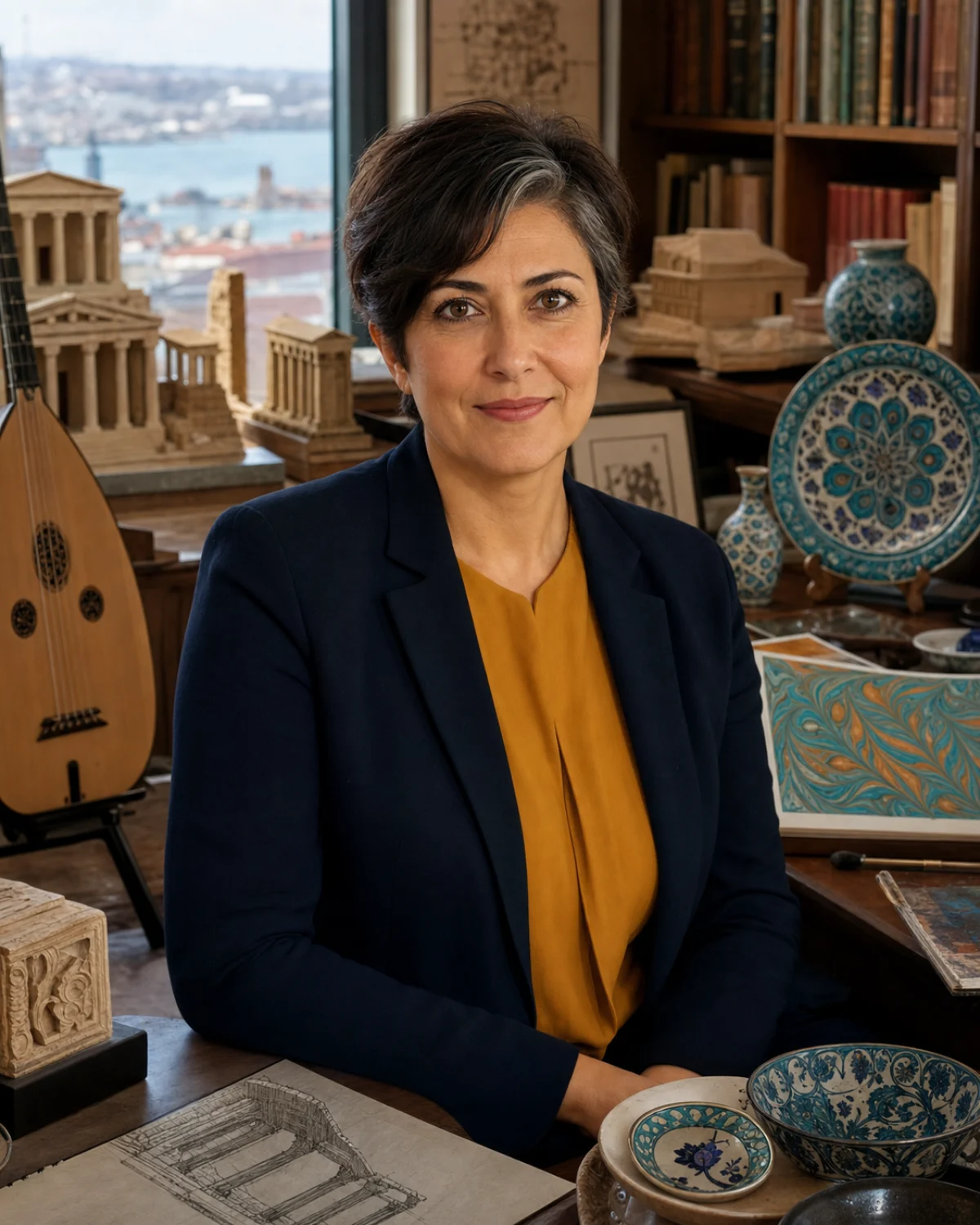
Turkish Architecture, Ceramics, Ebru, and Music

Read Turkish buildings, Iznik ceramics, ebru marbling, instruments, music, and material culture through form, technique, evidence, and context.

Try a text conversation without booking. Sign in to save tutor messages, schedule lessons, and use hosted voice calls.

Level
Beginner to advanced cultural study
Subject area
Turkish Language and Culture
Learning outcomes
4 focused outcomes

Topic overview

Learn the foundations of Turkish Architecture, Ceramics, Ebru, and Music.

Turkish architecture and arts reward close looking and listening. Plans, materials, structure, light, landscape, tile, clay, glaze, pigment, paper, marbling technique, calligraphic setting, instrument, mode, rhythm, performance, patronage, use, and provenance can all become evidence. Comparing documented examples across periods and regions helps learners notice continuity and change without assuming a motif has one fixed meaning or that visual similarity proves origin.

Learning outcomes for Turkish Architecture, Ceramics, Ebru, and Music

  1. 1

    Describe architectural, ceramic, marbling, and musical features accurately before interpreting them

  2. 2

    Connect material, technique, function, patronage, performance, place, and historical setting

  3. 3

    Compare Iznik ceramics, ebru, architecture, and music through provenance-aware questions

  4. 4

    Recognize when authentication, appraisal, conservation, acquisition, or contested attribution requires a qualified specialist

Related AI tutors

Talk through Turkish Architecture, Ceramics, Ebru, and Music with a tutor.

Ask for an explanation, a worked example, or practice adapted to your level.

View all matched tutors

Suggested route

How to learn Turkish Architecture, Ceramics, Ebru, and Music step by step.

01

Build the foundation

Describe architectural, ceramic, marbling, and musical features accurately before interpreting them

02

Practise with feedback

Connect material, technique, function, patronage, performance, place, and historical setting

03

Practise with feedback

Compare Iznik ceramics, ebru, architecture, and music through provenance-aware questions

04

Apply and reflect

Recognize when authentication, appraisal, conservation, acquisition, or contested attribution requires a qualified specialist

Related courses

Continue Turkish Architecture, Ceramics, Ebru, and Music with a structured course.

Browse all courses