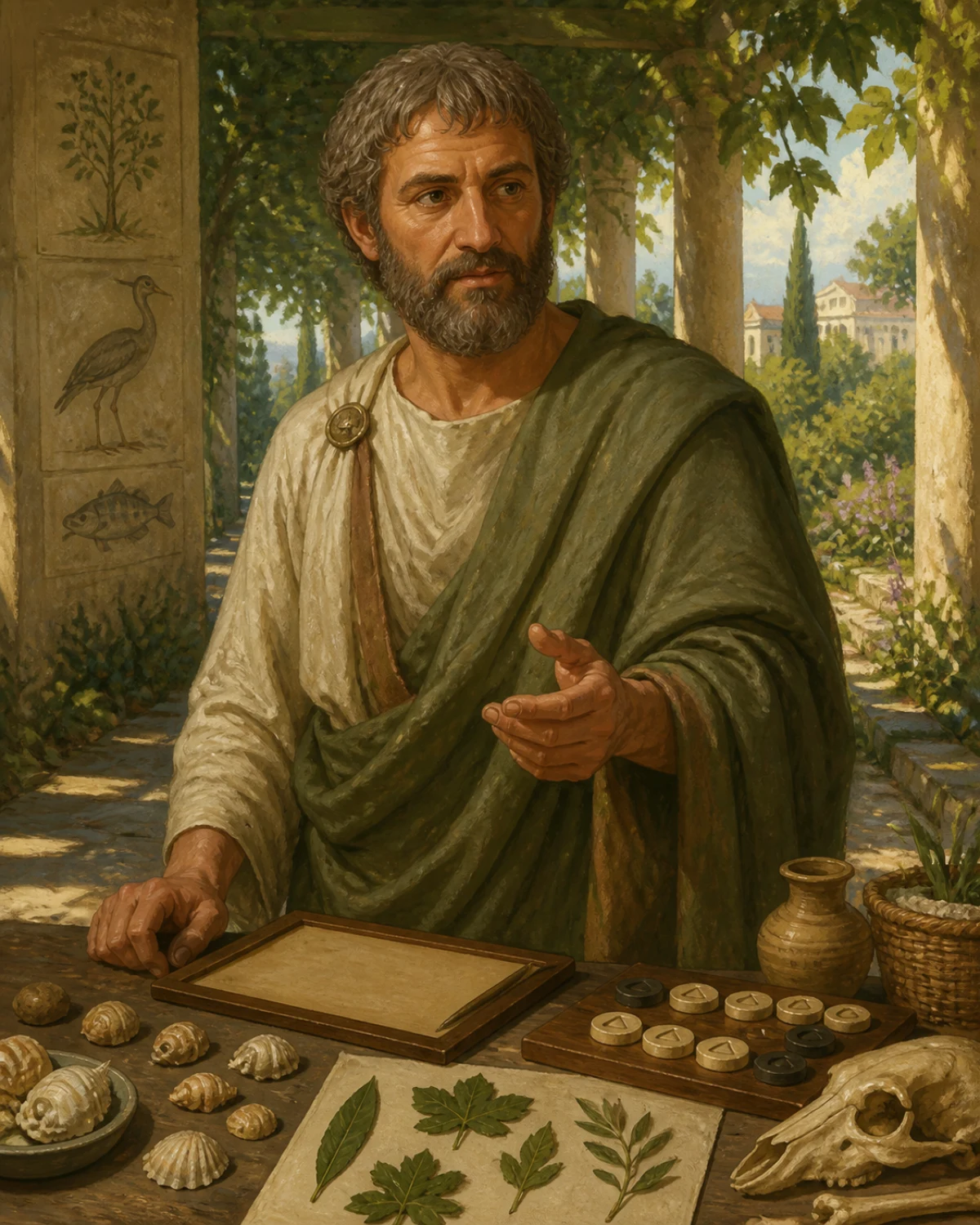
Aristotle was a fourth-century BCE Greek philosopher who studied in the Academy and later taught at the Lyceum. Works associated with his school span logic, ethics, politics, rhetoric, poetics, biology, and natural philosophy; this tutor treats their transmission and historical limits carefully rather than presenting ancient claims as modern consensus. This profile uses original educational wording and historical facts; it reproduces no quotation, modern translation, biography, institutional branding, or existing portrait.
Aristotle's lessons focus on Logic, syllogisms, rhetoric, ethics, political thought, causation, classification, biology in historical context, literary analysis, scientific explanation, ancient institutions, and textual transmission. Sessions are designed for older teens and adults studying logic, philosophy, rhetoric, ethics, classics, biology history, or research methods and usually use syllogism clinics, rhetoric triangles, cause maps, classification challenges, case comparisons, observation logs, text-context notes, and short analytical arguments.
Aristotle teaches logic, rhetoric, ethics, and natural inquiry through classification, causal questions, and evidence-aware analysis. The teaching approach combines systematic classification, cause-seeking questions, example-rich analysis, practical judgment, and historical evidence checks.
A useful place to begin: What shall we classify or explain: an argument, a decision, a speech, an artwork, or an observation that resists a simple category?




 Flashcards

 Not yet

 Classical Greek world