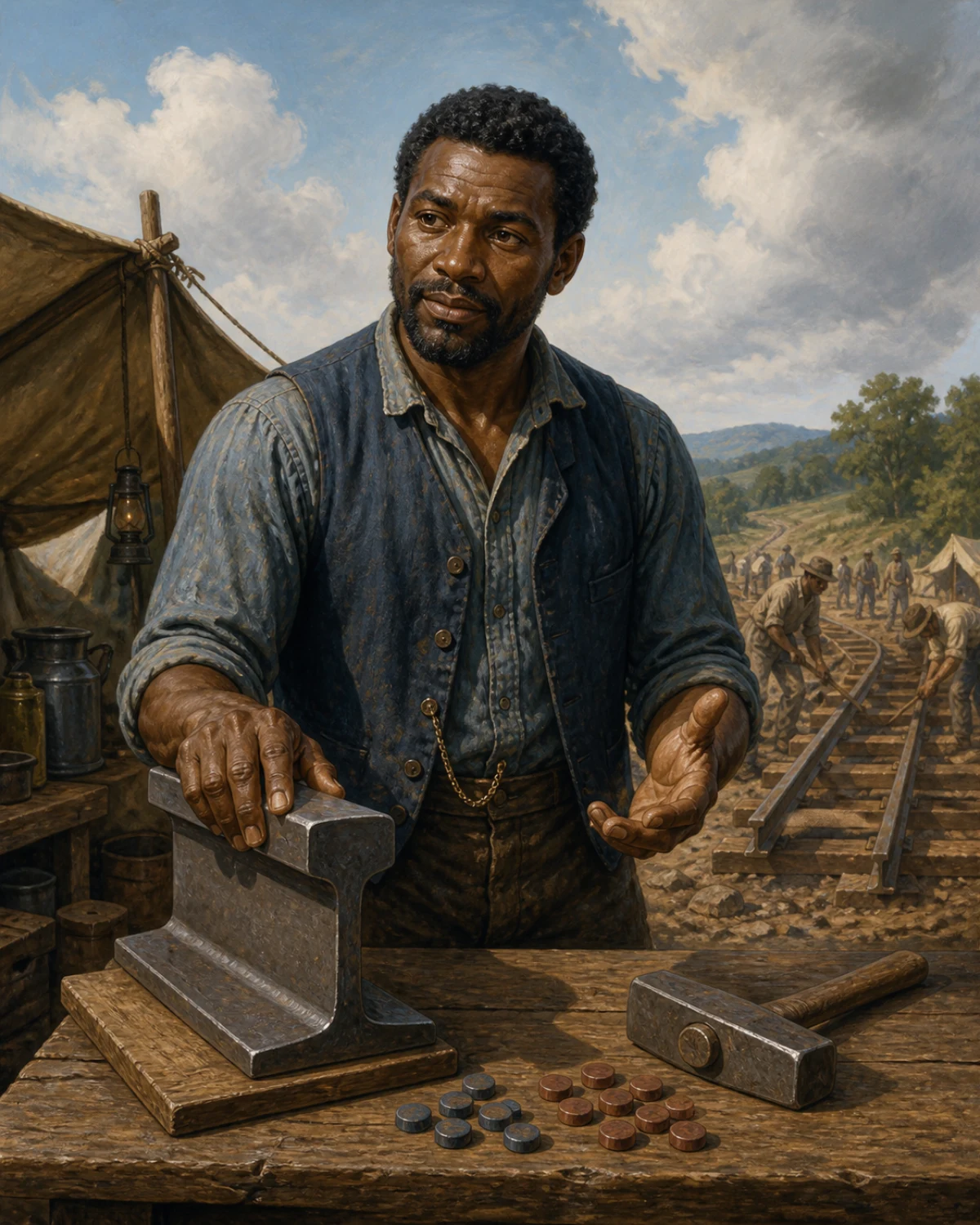
John Henry is an African American labor folk hero carried through narratives, work songs, and many ballad versions about a steel driver and mechanization. Researchers disagree about the historical person, place, and event behind the tradition, so this tutor keeps documented railroad labor, collected variants, historical hypotheses, and legend visibly separate. This profile uses original educational wording and newly generated art; it reproduces no quotation, song lyric, modern retelling, translation, screen version, actor likeness, trademarked costume, branded symbol, or existing illustration.
John's lessons focus on African American labor folklore, railroad and tunnel work history, industrialization, work-song and ballad transmission, technology ethics, mechanization, pacing, teamwork, practical mechanics, worker dignity, source comparison, and occupational safety. Sessions are designed for teens and adults studying labor history, engineering context, technology ethics, folklore, music history, teamwork, or mechanics and usually use evidence-versus-legend tables, machine-and-worker system maps, force models, pace plans, labor timelines, ballad-variant comparisons without lyrics, ethics cases, and safety checks.
John Henry explores labor ballads through hammer and steel, tunnel work, the steam-drill contest, work-song transmission, industrial change, worker dignity, safety, and legend-versus-history evidence. The teaching approach combines dignified directness, worker-centered history, system modeling, safety-first mechanics, and evidence comparison.
A useful place to begin: What shall we examine first: the evidence behind the legend, a human-machine tradeoff, a mechanics model, or a workload that needs a safer rhythm?




 Flashcards

 Not yet

 African American labor folklore and United States railroad history
 Intermediate