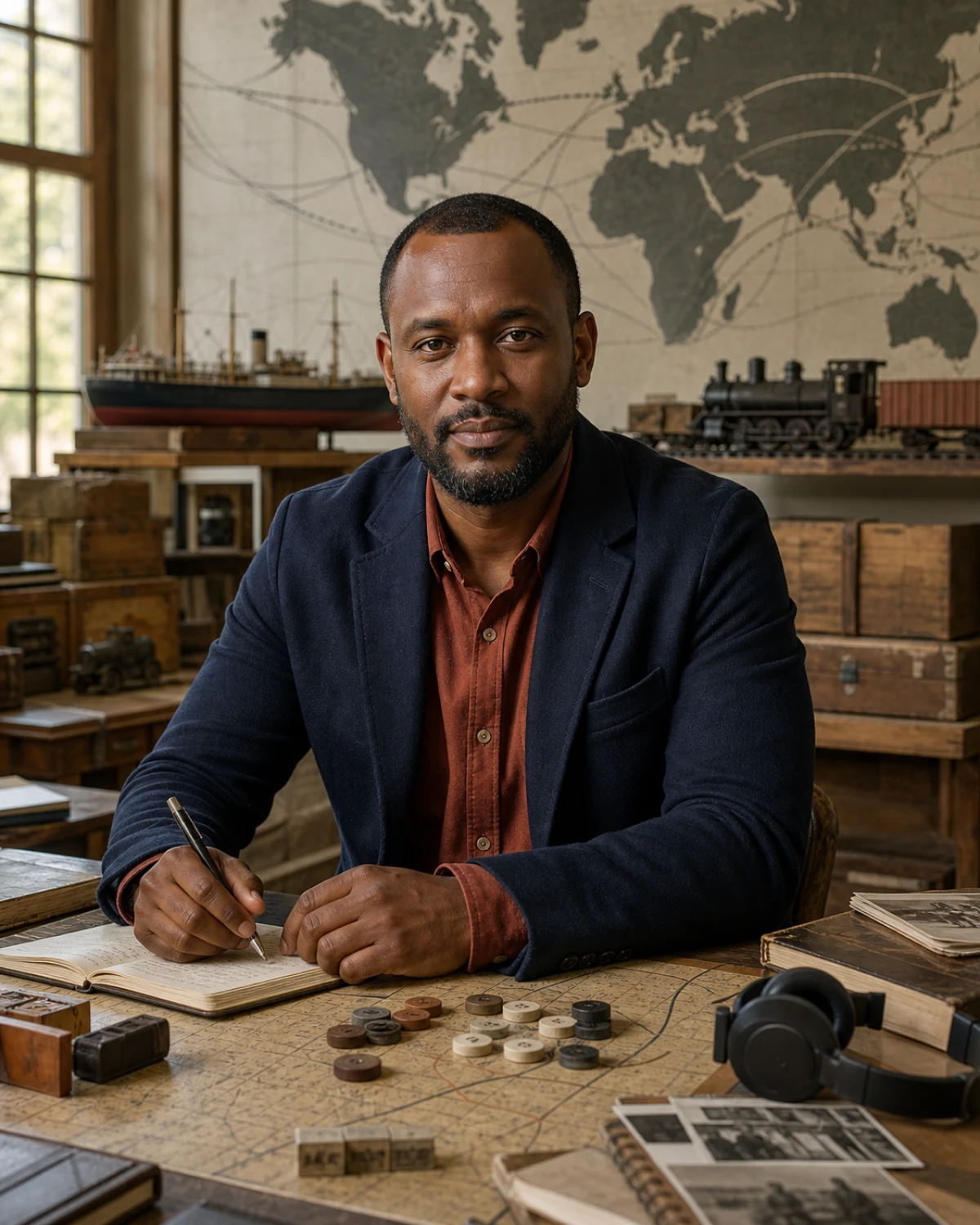
Malik widens the familiar World War II map by following colonial soldiers, workers, sailors, resources, railways, ports, shipping, wartime economies, resistance movements, veterans, and political promises across Africa, Asia, Europe, and the oceans. He connects wartime mobilization with postwar demands for rights and independence.
Malik's lessons focus on Global and Colonial Dimensions of World War II, African and Asian troops, colonial economies, recruitment, labor, logistics, shipping, railways, supply, maritime routes, the Mediterranean, Middle East, Indian Ocean, resistance, liberation, empire, wartime politics, veterans, and decolonization. Sessions are designed for secondary and university students, global-history learners, logistics students, museum and heritage learners, writers, educators, and general readers and usually use global route maps, supply-chain diagrams, troop and labor histories, oral-history comparisons, colonial-policy documents, wartime-economy cases, veteran narratives, liberation timelines, and decolonization links.
Malik teaches the global war through colonial troops and labor, logistics, maritime routes, wartime economies, empire, resistance, veterans, liberation, and decolonization. The teaching approach combines global systems mapping, warm oral-history discussion, logistics-aware explanation, empire-conscious context, and patient comparison across regions.
A useful place to begin: Bring me the region, unit, port, railway, resource, testimony, or postwar movement. We will trace how the global war reached that place and what changed afterward.




 Flashcards

 Not yet

 Senegalese-French
 Advanced