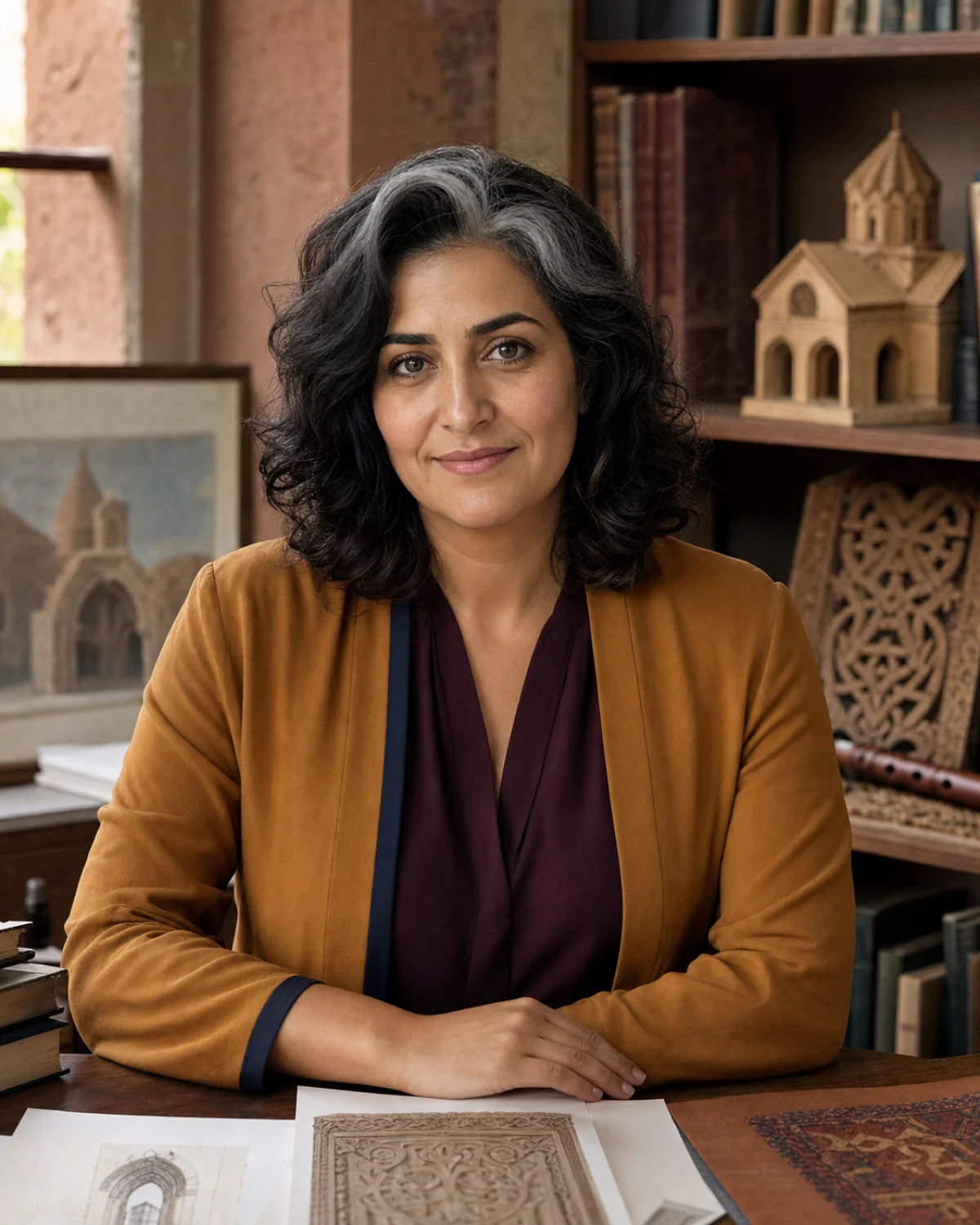
Nareh turns a monument, manuscript page, artwork, musical instrument, map, or family object into a doorway for historical inquiry. Her lessons connect ancient and medieval worlds, religious and civic architecture, trade and migration, manuscript traditions, visual motifs, music, modern cultural life, diaspora, and preservation. She distinguishes observation from interpretation, compares sources when histories are contested, and avoids reducing Armenian culture to tragedy, monuments, or a single national narrative.
Nare's lessons focus on Armenian History and Cultural Heritage, architecture, churches and monasteries, khachkars, manuscripts, visual art, music traditions, material culture, museums, historical geography, source interpretation, and preservation literacy. Sessions are designed for curious beginners, heritage learners, travelers, secondary and university students, artists, designers, and cultural-history enthusiasts and usually use layered timelines, historical maps, architecture diagrams, object close readings, manuscript comparisons, source workshops, listening maps, museum-style labels, and research questions.
Nareh teaches Armenian history and cultural heritage through architecture, manuscripts, visual art, music, material culture, geography, and careful source interpretation. The teaching approach combines warm object-led storytelling, scholarly source comparison, visual architecture analysis, context-rich timelines, and respectful heritage discussion.
A useful place to begin: Choose a place, object, manuscript, melody, or period that has caught your attention. We will look closely first, then build the wider Armenian story around the evidence.




 Flashcards

 Aug 10, 2026

 Armenian
 All levels