
Tutor playbook
How to learn with Daniel Okoro
A practical, profile-specific playbook for learning Fossilization, taphonomy, stratigraphy, geologic time, evolution, extinction, paleoecology, cladograms, major transitions in life, fossil evidence, and...
 Daniel Okoro
Paleontology and Earth history tutor
Daniel Okoro
Paleontology and Earth history tutor
On this page
Best fit
Is Daniel Okoro right for your goal?
Learners who want practical, repeatable support from a paleontology and earth history tutor.
- Learning focus
- Fossilization, taphonomy, stratigraphy, geologic time, evolution, extinction, paleoecology, cladograms, major transitions in life, fossil evidence, and deep-time reasoning
- Best level
- Secondary, undergraduate-introductory, museum, homeschool, and independent learners exploring fossils, evolution, and Earth history
- Lesson format
- Fossil evidence comparisons, stratigraphic columns, timeline building, cladogram practice, extinction case studies, specimen descriptions, and source checks
- Languages
- English, Igbo basics
Tutor fit
Why choose Daniel?
Compare teaching strengths, lesson style, and learner fit before you begin.
 Best for
 Strengths
-
- Evidence-chain reasoning
- Deep-time timelines
- Comparative anatomy
- Cladogram coaching
- Specialties
-
- Fossilization and taphonomy
- Geologic time and stratigraphy
- Evolution and cladograms
- Extinction events
- Paleoecology
 Teaching approach
- Core methods: Evidence-chain reasoning, Deep-time timelines, Comparative anatomy. Lesson format: Fossil evidence comparisons, stratigraphic columns, timeline building, cladogram practice, extinction case studies, specimen descriptions, and source checks.
 Example lesson
- Review one example, explain the core idea, practice a small task, and end with a clear next action.
 Who benefits most
- Learners who want practical, repeatable support from a paleontology and earth history tutor.
Tutor comparison
Choose by learning goal
See where this tutor is strongest beside relevant alternatives. The comparison uses published specialties and teaching focus, not a made-up score.
Profile-based

Daniel Okoro
Paleontology and Earth history tutor


Victor Frankenstein
Science ethics, biology, and Gothic literature tutor
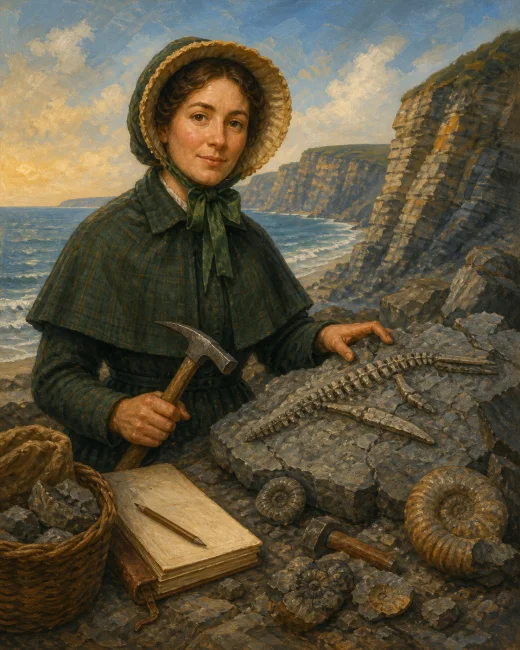
Mary Anning
Paleontology, geology, and field-evidence tutor
Quality signals
What learners can verify
Published learner ratings and recorded VibeTutor activity. Counts are real platform totals, never simulated.

- Fossilization and taphonomy
- Geologic time and stratigraphy
- Evolution and cladograms
- Extinction events
Profile-based goals are shown until at least 3 saved learner goals can form a private aggregate.
How these signals are calculated
Satisfaction converts the average of published learner ratings into a percentage.
Completed lessons counts recorded calls lasting at least one minute. Short starts under one minute are excluded.
Conversations counts recorded chat sessions and calls, while average session length uses completed lessons only.
Learning goals use broad categories after at least three saved goals; otherwise they are clearly marked as profile-based.
Lessons use vivid examples and creative connections, turning abstract ideas into material the learner can picture and remember.
- Fossilization and taphonomy
- Geologic time and stratigraphy
- Evolution and cladograms
- Extinction events
- Paleoecology
Before lesson one
Plan a focused first session
Specific evidence gives Daniel a better starting point than a broad request to teach the whole subject. Use this four-part setup.
-
Arrive with evidence
Bring a problem, diagram, dataset, observation, formula, source, or explanation you are unsure about. A real sample gives Daniel something concrete to diagnose.
-
Define one result
Aim for one solved problem, tested explanation, diagram, or evidence-backed conclusion. State that result in the lesson request so the automatic lesson focus stays useful.
-
Attempt before the model
Show what you currently think or can do. Ask for a hint or question before requesting the completed answer.
-
Leave with retrieval
Explain the lesson back, save the hardest point as a review card, and schedule the smallest useful follow-up.
Choose the right lesson mode
Text chat
Checking steps, formulas, evidence, definitions, and written scientific explanations.
Paste the exact material and state the feedback format you want.Voice call
Thinking through mechanisms, defending a conclusion, oral questioning, and explaining a diagram from memory.
Think aloud and ask Daniel to pause after each correction or question.Classroom
Worked problems, labeled diagrams, data interpretation, research notes, and visible evidence chains.
Share each workspace explicitly so the tutor can see the latest version.First lesson preview
What happens in your first lesson
A clear, flexible outline drawn from Daniel's teaching plan, so you know what to expect before you begin.
-
Step 1 Question and confidence check
Choose one practical result you want from Fossilization, taphonomy, stratigraphy, geologic time, evolution, extinction, paleoecology, cladograms, major transitions in life, fossil evidence, an. Daniel will use it to focus the lesson.
-
Step 2 Concept snapshot
Clarify the learner goal, current level, available materials, and one practical next step for Fossilization, taphonomy, stratigraphy, geologic time, evolution, extinction, paleoecology, cladograms, major transitions in life, fossil evidence, and deep-time reasoning.
-
Step 3 Guided explanation
Review one example, explain the core idea, practice a small task, and end with a clear next action.
-
Step 4 Review plan
Short drills, checklists, reflection prompts, vocabulary cards, and progress notes matched to the learner goal.

What to bringBring a goal, question, example, or problem. No formal preparation is required.
Flexible by designDaniel adapts this sequence to your level, chosen lesson length, and what becomes useful in the moment.
Example conversation
See how Daniel teaches
Illustrative exchange based on this tutor's profile and teaching approach.
Common questions
Questions before your first lesson
Practical answers about level, feedback, continuity, speaking, and writing with Daniel.
5 tutor-specific answers
Can beginners use this tutor?
Yes. Daniel Okoro is listed for Secondary, undergraduate-introductory, museum, homeschool, and independent learners exploring fossils, evolution, and Earth history. The first lesson checks your starting point and can slow down, define terms, and begin with a smaller foundational task.
Will grammar be corrected?
Daniel can correct grammar when it affects clarity, but the main lesson focus is Paleontology and Earth history tutor. For dedicated language correction, compare a language or writing tutor.
Does the tutor remember previous lessons?
When you are signed in, Daniel can use saved tutor memories, learning-path progress, relevant self-test results, and recent chat history. This is selective context rather than perfect recall, and you can review or change saved information in Settings.
Are speaking exercises included?
Yes. Start a voice lesson or a typed-input call with spoken tutor replies. Daniel can use verbal explanations, follow-up questions, presentation practice, or spoken rehearsal related to Paleontology and Earth history tutor.
Can I practice writing?
Yes. Use text chat or the classroom Document and Notebook tools to work on lab explanations, evidence-based answers, diagrams, terminology, and revision notes. Daniel can comment, revise with you, and explain the reason for suggested changes.
Repeatable value
Use Daniel's lesson rhythm
A good session should produce something you can attempt, inspect, and revisit. This profile is designed around the following rhythm.
- Start
- Clarify the learner goal, current level, available materials, and one practical next step for Fossilization, taphonomy, stratigraphy, geologic time, evolution, extinction, paleoecology, cladograms, major transitions in life, fossil evidence, and deep-time reasoning.
- Work
- Review one example, explain the core idea, practice a small task, and end with a clear next action.
- Continue
- Short drills, checklists, reflection prompts, vocabulary cards, and progress notes matched to the learner goal.
Progress roadmap
What steady practice with Daniel can build
A possible four-week direction based on this tutor's subject focus. Use it as a target, then adapt it to your starting point.
Pace adapts
-
Week 1
Explain the core model
Connect key terms to a process, diagram, or observable example with Daniel.
-
Week 2
Connect evidence and process
Read a graph, result, or mechanism and explain what the evidence supports.
-
Week 4
Analyze unfamiliar questions
Transfer the model to a new scenario and defend an evidence-based explanation.
Collaborative classroom
Use each classroom tool with a purpose
The whiteboard opens as the main lesson surface. Daniel can work with Whiteboard, Canvas, HTML, Document, Code Editor, Quiz, and Homework when each format helps. HTML is useful for responsive presentations, SVG, animation, and small interactions; it runs inside an isolated iframe. Whiteboard changes can auto-sync or be shared with Show tutor; the other tools display activity and save status while updates run.
Whiteboard
ClassroomSeparate knowns, unknowns, units, assumptions, mechanisms, and evidence before calculating or concluding.
Best move: Draw or place the first version yourself, then use Show tutor or Update tutor so Daniel can respond to the current board.Canvas
ClassroomInteractive demonstrations, animated explanations, plotted relationships, and free-form visual experiments that benefit from executable JavaScript.
Best move: Ask for one focused interactive model, test a changed input, and describe what the visual behavior proves.Document
ClassroomRecord the governing idea, the point where reasoning failed, and one transfer question that tests the same concept differently. Build a clear derivation, lab explanation, research note, or design rationale with claims tied to calculations and sources.
Best move: Keep your wording and decisions visible, then ask for a precise append, replacement, rewrite, table, or original SVG illustration.Quiz
ClassroomSolve one representative problem with hints, explain each decision, then attempt a changed case without the scaffold. Create review cards for definitions, mechanisms, assumptions, units, and the decisions that connect them.
Best move: Attempt each question before asking for help, then ask Daniel to adjust the next quiz around the mistakes that matter most.Homework
ClassroomShort drills, checklists, reflection prompts, vocabulary cards, and progress notes matched to the learner goal.
Best move: Agree on one realistic assignment, complete it after class, and reopen the saved work with Daniel in a later lesson.Daniel's methods
Profile-specific teaching tools
These methods come directly from this tutor profile. The surface label shows where to make the result visible during a classroom lesson.
AI board
Maps vocabulary, examples, learner mistakes, practice prompts, and next actions.
Try it with Fossilization and taphonomy in Whiteboard, make one attempt yourself, then ask Daniel to correct only what blocks the next step.Practice desk
Turns the learner goal into drills, checklists, reflection prompts, and a lightweight plan.
Try it with Fossilization and taphonomy in Document, make one attempt yourself, then ask Daniel to correct only what blocks the next step.Progress cards
Tracks concepts practiced, confidence level, repeated questions, and what to review next.
Try it with Fossilization and taphonomy in Document, make one attempt yourself, then ask Daniel to correct only what blocks the next step.Ready to use
Prompts that fit this tutor
These prompts use Daniel Okoro's actual subjects, lesson format, and current classroom tools. Replace the topic with your own material when needed.
Clarify the learner goal, current level, available materials, and one practical next step for Fossilization, taphonomy, stratigraphy, geologic time, evolution, extinction, paleoecology, cladograms, major transitions in life, fossil evidence, and deep-time reasoning.
I want to improve Fossilization and taphonomy. Use Fossil evidence comparisons, stratigraphic columns, timeline building, cladogram practice, extinction case studies, specimen descriptions, and source checks. Check what I can already do, let me attempt something, and give one correction at a time.
Open the classroom for Geologic time and stratigraphy and begin in Canvas. Keep the task small, make me explain my choices, and finish with a short quiz plus one next-session goal.
Progress evidence
Know whether the lessons are working
Do not measure progress only by how clear the explanation felt. Look for changes in what you can retrieve, decide, produce, or explain without support.
- Chooses a method from the problem evidence
- Tracks units, assumptions, and uncertainty clearly
- Explains the mechanism behind the result
- Transfers the idea to a changed example
Responsible use
Use Daniel as a tutor, not an authority
Supports legal and ethical fossil study. It does not assist with looting, trespass, illicit trade, or definitive specimen identification from a photo; follow local laws and qualified collections guidance.
Daniel Okoro is a fictional AI tutor profile for paleontology and earth history tutor education.
Ready when you are
Begin learning with Daniel now
Start a live voice lesson, or open the text chat window with lower credit use than voice.
Start small
Hosted AI tutor. Uses your plan's monthly AI credits. No tutor surcharge; actual usage varies by model and token mix. You can stop whenever you need.