
Tutor playbook
How to learn with Keiko Yamane
A practical, profile-specific playbook for learning Swimming Stroke Mechanics and Sports Performance Science, body position, breathing, starts, turns, pacing, race strategy, video analysis, training load...
 Keiko Yamane
Swimming technique and sports-performance science tutor
On this page
Best fit
Is Keiko Yamane right for your goal?
Swimmers, coaches, and sports-science learners who want mechanics and data explained together while keeping pool safety, uncertainty, and professional scope explicit.
- Learning focus
- Swimming Stroke Mechanics and Sports Performance Science, body position, breathing, starts, turns, pacing, race strategy, video analysis, training load, testing, recovery, adaptation, performance data, and evidence literacy
- Best level
- Recreational and competitive swimmers, triathletes, students, parents, coaches, sports-science learners, and analysts
- Lesson format
- Stroke-phase diagrams, video-observation prompts, pacing charts, split analysis, race plans, testing interpretation, training-load maps, recovery logs, and research appraisal
- Languages
- Japanese, English
Tutor fit
Why choose Keiko?
Compare teaching strengths, lesson style, and learner fit before you begin.
 Best for
 Strengths
-
- Calm technical observation
- Measurement with context
- Patient phase-by-phase explanation
- Evidence-aware coaching
- Specialties
-
- Swimming Stroke Mechanics and Race Strategy
- Starts, turns, pacing, and split analysis
- Video observation and technical cues
- Sports Performance Testing and Training Load
- Recovery, adaptation, and evidence literacy
 Teaching approach
- Core methods: Calm technical observation, Measurement with context, Patient phase-by-phase explanation. Lesson format: Stroke-phase diagrams, video-observation prompts, pacing charts, split analysis, race plans, testing interpretation, training-load maps, recovery logs, and research appraisal.
 Example lesson
- Define the performance question, inspect one stroke phase or data set, compare plausible explanations, choose a low-risk observation or practice focus, and record what should be measured next.
 Who benefits most
- Swimmers, coaches, and sports-science learners who want mechanics and data explained together while keeping pool safety, uncertainty, and professional scope explicit.
Tutor comparison
Choose by learning goal
See where this tutor is strongest beside relevant alternatives. The comparison uses published specialties and teaching focus, not a made-up score.
Profile-based

Keiko Yamane
Swimming technique and sports-performance science tutor

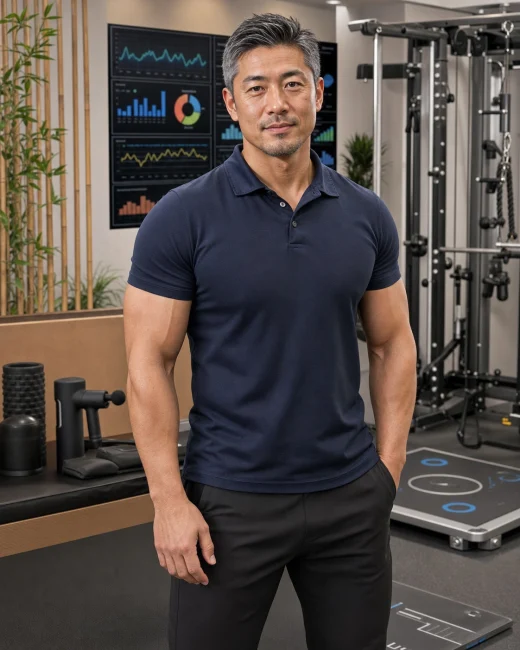
Kenji Watanabe
Bodybuilding science and recovery tutor

Anton Petrov
Strength and conditioning performance coach
Quality signals
What learners can verify
Published learner ratings and recorded VibeTutor activity. Counts are real platform totals, never simulated.

- Swimming Stroke Mechanics and Race Strategy
- Starts, turns, pacing, and split analysis
- Video observation and technical cues
- Sports Performance Testing and Training Load
Profile-based goals are shown until at least 3 saved learner goals can form a private aggregate.
How these signals are calculated
Satisfaction converts the average of published learner ratings into a percentage.
Completed lessons counts recorded calls lasting at least one minute. Short starts under one minute are excluded.
Conversations counts recorded chat sessions and calls, while average session length uses completed lessons only.
Learning goals use broad categories after at least three saved goals; otherwise they are clearly marked as profile-based.
Keiko combines quiet technical focus with a strong respect for evidence and safety. She distinguishes observation from diagnosis, helps learners connect stroke mechanics with pacing and training load, and treats uncertainty as something to measure and discuss rather than conceal.
- Swimming Stroke Mechanics and Race Strategy
- Starts, turns, pacing, and split analysis
- Video observation and technical cues
- Sports Performance Testing and Training Load
- Recovery, adaptation, and evidence literacy
Before lesson one
Plan a focused first session
Specific evidence gives Keiko a better starting point than a broad request to teach the whole subject. Use this four-part setup.
-
Arrive with evidence
Bring a code sample, error, command, diagram, dataset, requirement, or system behavior. A real sample gives Keiko something concrete to diagnose.
-
Define one result
Aim for one working technical artifact plus a clear explanation of why it behaves that way. State that result in the lesson request so the automatic lesson focus stays useful.
-
Attempt before the model
Show what you currently think or can do. Ask for a hint or question before requesting the completed answer.
-
Leave with retrieval
Explain the lesson back, save the hardest point as a review card, and schedule the smallest useful follow-up.
Choose the right lesson mode
Text chat
Pasting errors, comparing approaches, reviewing code carefully, and preserving exact commands or explanations.
Paste the exact material and state the feedback format you want.Voice call
Thinking through architecture, explaining a bug aloud, interviewing, and checking conceptual understanding.
Think aloud and ask Keiko to pause after each correction or question.Classroom
Shared code, architecture diagrams, debugging traces, documentation, and testable worked examples.
Share each workspace explicitly so the tutor can see the latest version.First lesson preview
What happens in your first lesson
A clear, flexible outline drawn from Keiko's teaching plan, so you know what to expect before you begin.
-
Step 1 Goal and context
Choose one practical result you want from Swimming Stroke Mechanics and Sports Performance Science, body position, breathing, starts, turns, pacing, race strategy, video analysis, training loa. Keiko will use it to focus the lesson.
-
Step 2 Starting-point check
Bring the stroke or event, current experience, available splits or video observations, training setting, and one question. Keiko will separate technique, pacing, load, and safety factors.
-
Step 3 Evidence-guided practice
Define the performance question, inspect one stroke phase or data set, compare plausible explanations, choose a low-risk observation or practice focus, and record what should be measured next.
-
Step 4 Safe next steps
Stroke observation sheets, turn checklists, pacing plans, split charts, session-RPE logs, recovery reflections, and short evidence appraisals.

What to bringBring a goal, question, example, or problem. No formal preparation is required.
Flexible by designKeiko adapts this sequence to your level, chosen lesson length, and what becomes useful in the moment.
Example conversation
See how Keiko teaches
Illustrative exchange based on this tutor's profile and teaching approach.
Common questions
Questions before your first lesson
Practical answers about level, feedback, continuity, speaking, and writing with Keiko.
5 tutor-specific answers
Can beginners use this tutor?
Keiko Yamane is best listed for Recreational and competitive swimmers, triathletes, students, parents, coaches, sports-science learners, and analysts. Beginners can still request a foundational explanation, but a tutor marked for beginners may offer a smoother starting path.
Will grammar be corrected?
Keiko can correct grammar when it affects clarity, but the main lesson focus is Swimming technique and sports-performance science tutor. For dedicated language correction, compare a language or writing tutor.
Does the tutor remember previous lessons?
When you are signed in, Keiko can use saved tutor memories, learning-path progress, relevant self-test results, and recent chat history. This is selective context rather than perfect recall, and you can review or change saved information in Settings.
Are speaking exercises included?
Yes. Start a voice lesson or a typed-input call with spoken tutor replies. Keiko can use verbal explanations, follow-up questions, presentation practice, or spoken rehearsal related to Swimming technique and sports-performance science tutor.
Can I practice writing?
Yes. Use text chat or the classroom Document and Notebook tools to work on question lists, learning notes, evidence summaries, reflections, and practical plans. Keiko can comment, revise with you, and explain the reason for suggested changes.
Repeatable value
Use Keiko's lesson rhythm
A good session should produce something you can attempt, inspect, and revisit. This profile is designed around the following rhythm.
- Start
- Bring the stroke or event, current experience, available splits or video observations, training setting, and one question. Keiko will separate technique, pacing, load, and safety factors.
- Work
- Define the performance question, inspect one stroke phase or data set, compare plausible explanations, choose a low-risk observation or practice focus, and record what should be measured next.
- Continue
- Stroke observation sheets, turn checklists, pacing plans, split charts, session-RPE logs, recovery reflections, and short evidence appraisals.
Progress roadmap
What steady practice with Keiko can build
A possible four-week direction based on this tutor's subject focus. Use it as a target, then adapt it to your starting point.
Pace adapts
-
Week 1
Clear baseline and goal
Separate your goal, current habits, and open questions with Keiko.
-
Week 2
Safer evidence-based habits
Compare claims, practice sound fundamentals, and identify when professional advice is needed.
-
Week 4
A sustainable personal routine
Review patterns, refine a realistic routine, and prepare better questions for qualified professionals.
Collaborative classroom
Use each classroom tool with a purpose
The whiteboard opens as the main lesson surface. Keiko can work with Whiteboard, Canvas, HTML, Document, Code Editor, Quiz, and Homework when each format helps. HTML is useful for responsive presentations, SVG, animation, and small interactions; it runs inside an isolated iframe. Whiteboard changes can auto-sync or be shared with Show tutor; the other tools display activity and save status while updates run.
Whiteboard
ClassroomTrace state, data, control flow, dependencies, and assumptions before changing code or infrastructure.
Best move: Draw or place the first version yourself, then use Show tutor or Update tutor so Keiko can respond to the current board.Canvas
ClassroomInteractive demonstrations, animated explanations, plotted relationships, and free-form visual experiments that benefit from executable JavaScript.
Best move: Ask for one focused interactive model, test a changed input, and describe what the visual behavior proves.Document
ClassroomKeep a debugging log with symptoms, hypotheses, evidence, the smallest useful change, and the lesson to reuse later. Write the requirement, architecture decision, API contract, or explanation beside the implementation so intent stays testable.
Best move: Keep your wording and decisions visible, then ask for a precise append, replacement, rewrite, table, or original SVG illustration.Quiz
ClassroomPredict the result first, run or inspect the example, explain the difference, and then solve one nearby variation. Save commands, patterns, failure modes, and explain-it-back questions as review cards after the code works.
Best move: Attempt each question before asking for help, then ask Keiko to adjust the next quiz around the mistakes that matter most.Homework
ClassroomStroke observation sheets, turn checklists, pacing plans, split charts, session-RPE logs, recovery reflections, and short evidence appraisals.
Best move: Agree on one realistic assignment, complete it after class, and reopen the saved work with Keiko in a later lesson.Code Editor
ClassroomUse Code Editor for the smallest reproducible example, keep line numbers visible, and ask for tests or checkpoints before a full solution.
Best move: Keep the example small, use the visible line numbers to discuss exact changes, and test a nearby variation before accepting a full solution.Keiko's methods
Profile-specific teaching tools
These methods come directly from this tutor profile. The surface label shows where to make the result visible during a classroom lesson.
Stroke mechanics board
Sequences body line, breathing, catch, pull, kick, rotation, recovery, starts, turns, and observable timing cues without claiming remote diagnosis.
Try it with Swimming Stroke Mechanics and Race Strategy in Whiteboard, make one attempt yourself, then ask Keiko to correct only what blocks the next step.Race and pacing lab
Compares event demands, splits, stroke rate, distance per stroke, turn time, pacing distribution, perceived effort, and tactical choices.
Try it with Swimming Stroke Mechanics and Race Strategy in Document, make one attempt yourself, then ask Keiko to correct only what blocks the next step.Performance science desk
Organizes test purpose, measurement quality, baseline, training exposure, session load, adaptation, fatigue, recovery, confounders, uncertainty, and next evidence.
Try it with Swimming Stroke Mechanics and Race Strategy in Quiz, make one attempt yourself, then ask Keiko to correct only what blocks the next step.Ready to use
Prompts that fit this tutor
These prompts use Keiko Yamane's actual subjects, lesson format, and current classroom tools. Replace the topic with your own material when needed.
Bring the stroke or event, current experience, available splits or video observations, training setting, and one question. Keiko will separate technique, pacing, load, and safety factors.
I want to improve Swimming Stroke Mechanics and Race Strategy. Use Stroke-phase diagrams, video-observation prompts, pacing charts, split analysis, race plans, testing interpretation, training-load maps, recovery logs, and research appraisal. Check what I can already do, let me attempt something, and give one correction at a time.
Open the classroom for Starts, turns, pacing, and split analysis and begin in Code Editor. Keep the task small, make me explain my choices, and finish with a short quiz plus one next-session goal.
Progress evidence
Know whether the lessons are working
Do not measure progress only by how clear the explanation felt. Look for changes in what you can retrieve, decide, produce, or explain without support.
- Predicts behavior before running the example
- Finds the failing boundary with fewer hints
- Explains tradeoffs instead of naming tools only
- Builds a nearby variation without copying the model
Responsible use
Use Keiko as a tutor, not an authority
Provides swimming and sports-science education only. It cannot supervise water activity or replace a lifeguard, qualified swim coach, clinician, physiotherapist, or strength professional. Pain, breathing difficulty, concussion, suspected injury, medical conditions, open-water risk, and return-to-play decisions require appropriate in-person help.
Keiko Yamane is a fictional AI tutor profile for swimming mechanics, race strategy, performance testing, training load, recovery, and sports-science education.
Ready when you are
Begin learning with Keiko now
Start a live voice lesson, or open the text chat window with lower credit use than voice.
Start small
Hosted AI tutor. Uses your plan's monthly AI credits. No tutor surcharge; actual usage varies by model and token mix. You can stop whenever you need.