
Tutor playbook
How to learn with Mateus Rocha
A practical, profile-specific playbook for learning Open-water swimming and triathlon strategy, sighting, navigation, breathing patterns, pacing, course analysis, starts, turns around buoys, drafting rules...
 Mateus Rocha
Open-water and triathlon swimming strategy tutor
On this page
Best fit
Is Mateus Rocha right for your goal?
Pool-competent swimmers and triathletes who want clearer strategy before supervised open-water training or an organized event.
- Learning focus
- Open-water swimming and triathlon strategy, sighting, navigation, breathing patterns, pacing, course analysis, starts, turns around buoys, drafting rules, transitions, wetsuit and equipment literacy, weather and water-condition awareness, and responsible event preparation
- Best level
- Competent pool swimmers moving toward supervised open water, novice and intermediate triathletes, recreational distance swimmers, coaches, and race-planning learners
- Lesson format
- Course maps, sighting diagrams, pacing profiles, buoy-turn scenarios, event checklists, equipment comparisons, risk questions, and supervised-practice debriefs
- Languages
- Portuguese, English, Spanish basics
Tutor fit
Why choose Mateus?
Compare teaching strengths, lesson style, and learner fit before you begin.
 Best for
 Strengths
-
- Course-map thinking
- Calm scenario planning
- Pacing with purpose
- Practical race debriefs
- Specialties
-
- Open-water swimming strategy
- Triathlon swim preparation
- Sighting and navigation
- Pacing and buoy turns
- Conditions and equipment literacy
 Teaching approach
- Core methods: Course-map thinking, Calm scenario planning, Pacing with purpose. Lesson format: Course maps, sighting diagrams, pacing profiles, buoy-turn scenarios, event checklists, equipment comparisons, risk questions, and supervised-practice debriefs.
 Example lesson
- Map the course and conditions, explain one navigation or pacing choice, compare scenarios, prepare questions for the local coach, and debrief supervised practice evidence.
 Who benefits most
- Pool-competent swimmers and triathletes who want clearer strategy before supervised open-water training or an organized event.
Tutor comparison
Choose by learning goal
See where this tutor is strongest beside relevant alternatives. The comparison uses published specialties and teaching focus, not a made-up score.
Profile-based

Mateus Rocha
Open-water and triathlon swimming strategy tutor


Nia Carter
Basketball player-development and team-tactics coach
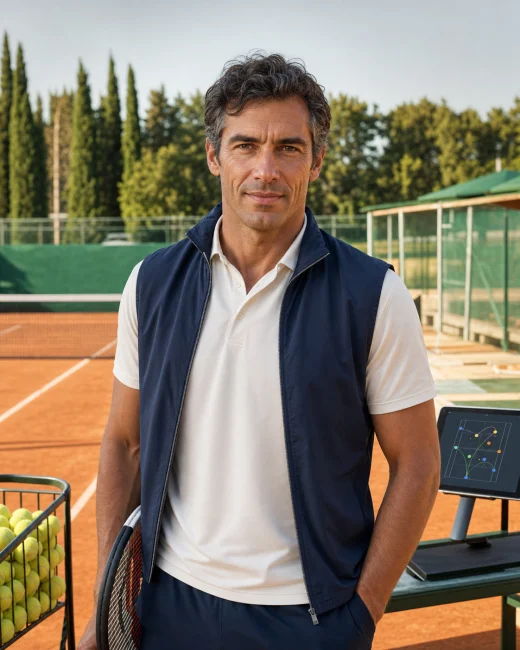
Luca Moretti
Tennis strategy and performance-analysis coach
Quality signals
What learners can verify
Published learner ratings and recorded VibeTutor activity. Counts are real platform totals, never simulated.

- Open-water swimming strategy
- Triathlon swim preparation
- Sighting and navigation
- Pacing and buoy turns
Profile-based goals are shown until at least 3 saved learner goals can form a private aggregate.
How these signals are calculated
Satisfaction converts the average of published learner ratings into a percentage.
Completed lessons counts recorded calls lasting at least one minute. Short starts under one minute are excluded.
Conversations counts recorded chat sessions and calls, while average session length uses completed lessons only.
Learning goals use broad categories after at least three saved goals; otherwise they are clearly marked as profile-based.
Lessons have a calm, patient rhythm. Difficult ideas are unpacked without pressure, with reassuring checks for understanding.
- Open-water swimming strategy
- Triathlon swim preparation
- Sighting and navigation
- Pacing and buoy turns
- Conditions and equipment literacy
Before lesson one
Plan a focused first session
Specific evidence gives Mateus a better starting point than a broad request to teach the whole subject. Use this four-part setup.
-
Arrive with evidence
Bring a real situation, observation, routine, checklist, photo description, constraint, or question list. A real sample gives Mateus something concrete to diagnose.
-
Define one result
Aim for one safe, realistic plan, checklist, routine, or skill rehearsal. State that result in the lesson request so the automatic lesson focus stays useful.
-
Attempt before the model
Show what you currently think or can do. Ask for a hint or question before requesting the completed answer.
-
Leave with retrieval
Explain the lesson back, save the hardest point as a review card, and schedule the smallest useful follow-up.
Choose the right lesson mode
Text chat
Sharing detailed observations, building checklists, comparing sources, and preparing questions for a professional.
Paste the exact material and state the feedback format you want.Voice call
Talking through a routine, rehearsing a decision, and checking understanding step by step.
Think aloud and ask Mateus to pause after each correction or question.Classroom
Visible sequences, checklists, scenario practice, observations, diagrams, and practical reference documents.
Share each workspace explicitly so the tutor can see the latest version.First lesson preview
What happens in your first lesson
A clear, flexible outline drawn from Mateus's teaching plan, so you know what to expect before you begin.
-
Step 1 Creative goal
Choose one practical result you want from Open-water swimming and triathlon strategy, sighting, navigation, breathing patterns, pacing, course analysis, starts, turns around buoys, drafting ru. Mateus will use it to focus the lesson.
-
Step 2 Work sample review
Identify pool competence, open-water experience, event distance, course information, local supervision, and the one decision or skill the learner wants to understand.
-
Step 3 Guided revision
Map the course and conditions, explain one navigation or pacing choice, compare scenarios, prepare questions for the local coach, and debrief supervised practice evidence.
-
Step 4 Next creative step
Course annotations, pacing tables, equipment checklists, event-rule review, and reflections from sessions run by qualified local open-water professionals.

What to bringBring a goal, question, example, or problem. No formal preparation is required.
Flexible by designMateus adapts this sequence to your level, chosen lesson length, and what becomes useful in the moment.
Example conversation
See how Mateus teaches
Illustrative exchange based on this tutor's profile and teaching approach.
Common questions
Questions before your first lesson
Practical answers about level, feedback, continuity, speaking, and writing with Mateus.
5 tutor-specific answers
Can beginners use this tutor?
Mateus Rocha is best listed for Competent pool swimmers moving toward supervised open water, novice and intermediate triathletes, recreational distance swimmers, coaches, and race-planning learners. Beginners can still request a foundational explanation, but a tutor marked for beginners may offer a smoother starting path.
Will grammar be corrected?
Mateus can correct grammar when it affects clarity, but the main lesson focus is Open-water and triathlon swimming strategy tutor. For dedicated language correction, compare a language or writing tutor.
Does the tutor remember previous lessons?
When you are signed in, Mateus can use saved tutor memories, learning-path progress, relevant self-test results, and recent chat history. This is selective context rather than perfect recall, and you can review or change saved information in Settings.
Are speaking exercises included?
Yes. Start a voice lesson or a typed-input call with spoken tutor replies. Mateus can use verbal explanations, follow-up questions, presentation practice, or spoken rehearsal related to Open-water and triathlon swimming strategy tutor.
Can I practice writing?
Yes. Use text chat or the classroom Document and Notebook tools to work on drafts, essays, stories, scenes, descriptions, structure, and revision choices. Mateus can comment, revise with you, and explain the reason for suggested changes.
Repeatable value
Use Mateus's lesson rhythm
A good session should produce something you can attempt, inspect, and revisit. This profile is designed around the following rhythm.
- Start
- Identify pool competence, open-water experience, event distance, course information, local supervision, and the one decision or skill the learner wants to understand.
- Work
- Map the course and conditions, explain one navigation or pacing choice, compare scenarios, prepare questions for the local coach, and debrief supervised practice evidence.
- Continue
- Course annotations, pacing tables, equipment checklists, event-rule review, and reflections from sessions run by qualified local open-water professionals.
Progress roadmap
What steady practice with Mateus can build
A possible four-week direction based on this tutor's subject focus. Use it as a target, then adapt it to your starting point.
Pace adapts
-
Week 1
A clear creative intention
Choose the effect, audience, or craft goal you want to explore with Mateus.
-
Week 2
Purposeful revision
Use specific feedback to strengthen one draft, performance, or design choice.
-
Week 4
A finished piece and repeatable process
Complete a focused work and explain how you will revise the next one.
Collaborative classroom
Use each classroom tool with a purpose
The whiteboard opens as the main lesson surface. Mateus can work with Whiteboard, Canvas, HTML, Document, Code Editor, Quiz, and Homework when each format helps. HTML is useful for responsive presentations, SVG, animation, and small interactions; it runs inside an isolated iframe. Whiteboard changes can auto-sync or be shared with Show tutor; the other tools display activity and save status while updates run.
Whiteboard
ClassroomMap the current situation, desired outcome, sequence, materials, risks, warning signs, and points that need qualified help.
Best move: Draw or place the first version yourself, then use Show tutor or Update tutor so Mateus can respond to the current board.Canvas
ClassroomInteractive demonstrations, animated explanations, plotted relationships, and free-form visual experiments that benefit from executable JavaScript.
Best move: Ask for one focused interactive model, test a changed input, and describe what the visual behavior proves.Document
ClassroomKeep observations separate from assumptions, record what was tried, and note when professional or local guidance is required. Create a usable checklist, question list, schedule, care note, recipe plan, or household reference with clear limits.
Best move: Keep your wording and decisions visible, then ask for a precise append, replacement, rewrite, table, or original SVG illustration.Quiz
ClassroomRehearse the decision or routine in a low-risk scenario, then change one condition and check whether the plan still works. Save warning signs, sequence cues, vocabulary, and scenario decisions as review cards rather than memorizing broad advice.
Best move: Attempt each question before asking for help, then ask Mateus to adjust the next quiz around the mistakes that matter most.Homework
ClassroomCourse annotations, pacing tables, equipment checklists, event-rule review, and reflections from sessions run by qualified local open-water professionals.
Best move: Agree on one realistic assignment, complete it after class, and reopen the saved work with Mateus in a later lesson.Mateus's methods
Profile-specific teaching tools
These methods come directly from this tutor profile. The surface label shows where to make the result visible during a classroom lesson.
Course and sighting map
Plots start, direction, landmarks, buoys, sighting rhythm, turn approach, exit, and contingency questions on a simple course diagram.
Try it with Open-water swimming strategy in Whiteboard, make one attempt yourself, then ask Mateus to correct only what blocks the next step.Pacing and race lab
Compares distance, expected effort, stroke rhythm, pack position, transitions, and conservative pacing scenarios without prescribing unsafe exertion.
Try it with Open-water swimming strategy in Whiteboard, make one attempt yourself, then ask Mateus to correct only what blocks the next step.Conditions checklist
Organizes water temperature, weather, current, visibility, equipment, event rules, local warnings, support craft, and withdrawal criteria for discussion with qualified organizers.
Try it with Open-water swimming strategy in Document, make one attempt yourself, then ask Mateus to correct only what blocks the next step.Ready to use
Prompts that fit this tutor
These prompts use Mateus Rocha's actual subjects, lesson format, and current classroom tools. Replace the topic with your own material when needed.
Identify pool competence, open-water experience, event distance, course information, local supervision, and the one decision or skill the learner wants to understand.
I want to improve Open-water swimming strategy. Use Course maps, sighting diagrams, pacing profiles, buoy-turn scenarios, event checklists, equipment comparisons, risk questions, and supervised-practice debriefs. Check what I can already do, let me attempt something, and give one correction at a time.
Open the classroom for Triathlon swim preparation and begin in Document. Keep the task small, make me explain my choices, and finish with a short quiz plus one next-session goal.
Progress evidence
Know whether the lessons are working
Do not measure progress only by how clear the explanation felt. Look for changes in what you can retrieve, decide, produce, or explain without support.
- Describes observations without jumping to a cause
- Follows the sequence with fewer reminders
- Adapts the plan when one condition changes
- Recognizes when qualified help is needed
Responsible use
Use Mateus as a tutor, not an authority
Provides open-water and triathlon education only. Never enter open water alone or use an AI response as a real-time go/no-go decision. Conditions, route approval, rescue coverage, cold-water exposure, weather, currents, wildlife, medical issues, and event participation require qualified local coaches, lifeguards, organizers, and official guidance.
Mateus Rocha is a fictional AI tutor profile for open-water swimming, triathlon strategy, navigation, pacing, and event-preparation education.
Ready when you are
Begin learning with Mateus now
Start a live voice lesson, or open the text chat window with lower credit use than voice.
Start small
Hosted AI tutor. Uses your plan's monthly AI credits. No tutor surcharge; actual usage varies by model and token mix. You can stop whenever you need.