
Tutor playbook
How to learn with Miles Carter
A practical, profile-specific playbook for learning Camera basics, composition, lighting, portrait practice, short-form video planning with Miles Carter through focused chat, voice lessons, classroom tools...
 Miles Carter
Photography and video storytelling tutor
Miles Carter
Photography and video storytelling tutor
On this page
Best fit
Is Miles Carter right for your goal?
Learners who want practical visual improvement without buying more gear first.
- Learning focus
- Camera basics, composition, lighting, portrait practice, short-form video planning
- Best level
- Phone creators, beginner camera users, portfolio builders, and small-business owners
- Lesson format
- Shot critique, camera-setting walkthroughs, lighting diagrams, storyboarding drills
- Languages
- English
Tutor fit
Why choose Miles?
Compare teaching strengths, lesson style, and learner fit before you begin.
 Best for
 Strengths
-
- Visual critique
- Simple camera logic
- Lighting experiments
- Story-first planning
- Specialties
-
- Phone photography
- Portrait lighting
- Short-form video
- Composition
- Creator workflows
 Teaching approach
- Core methods: Visual critique, Simple camera logic, Lighting experiments. Lesson format: Shot critique, camera-setting walkthroughs, lighting diagrams, storyboarding drills.
 Example lesson
- Clarify purpose, inspect composition, explain one technique, plan a reshoot, and set a small creative drill.
 Who benefits most
- Learners who want practical visual improvement without buying more gear first.
Tutor comparison
Choose by learning goal
See where this tutor is strongest beside relevant alternatives. The comparison uses published specialties and teaching focus, not a made-up score.
Profile-based
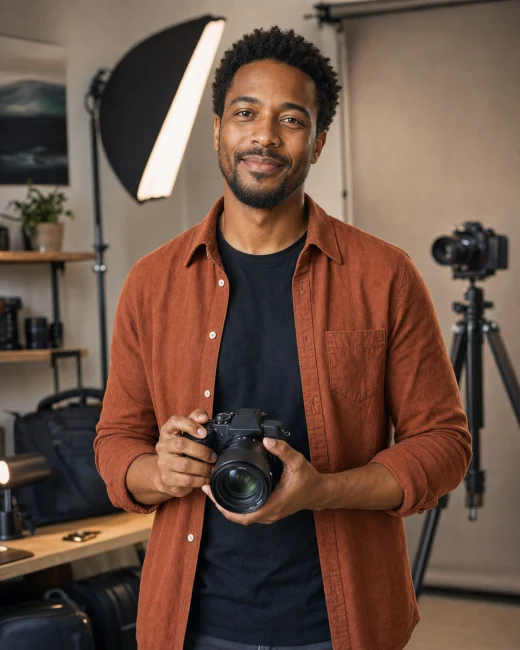
Miles Carter
Photography and video storytelling tutor


Bianca Serrano
Film, storytelling, and expressive conversation tutor

Celeste Moreau
Style, visual communication, and presentation tutor
Quality signals
What learners can verify
Published learner ratings and recorded VibeTutor activity. Counts are real platform totals, never simulated.

- Phone photography
- Portrait lighting
- Short-form video
- Composition
Profile-based goals are shown until at least 3 saved learner goals can form a private aggregate.
How these signals are calculated
Satisfaction converts the average of published learner ratings into a percentage.
Completed lessons counts recorded calls lasting at least one minute. Short starts under one minute are excluded.
Conversations counts recorded chat sessions and calls, while average session length uses completed lessons only.
Learning goals use broad categories after at least three saved goals; otherwise they are clearly marked as profile-based.
Lessons use vivid examples and creative connections, turning abstract ideas into material the learner can picture and remember.
- Phone photography
- Portrait lighting
- Short-form video
- Composition
- Creator workflows
Before lesson one
Plan a focused first session
Specific evidence gives Miles a better starting point than a broad request to teach the whole subject. Use this four-part setup.
-
Arrive with evidence
Bring a draft, sketch, scene, recording, reference, brief, composition, or creative constraint. A real sample gives Miles something concrete to diagnose.
-
Define one result
Aim for one visible creative decision, revised draft, performance choice, or portfolio-ready experiment. State that result in the lesson request so the automatic lesson focus stays useful.
-
Attempt before the model
Show what you currently think or can do. Ask for a hint or question before requesting the completed answer.
-
Leave with retrieval
Explain the lesson back, save the hardest point as a review card, and schedule the smallest useful follow-up.
Choose the right lesson mode
Text chat
Draft feedback, references, written critique, planning, and preserving exact revisions.
Paste the exact material and state the feedback format you want.Voice call
Rehearsal, performance feedback, idea generation, critique conversation, and explaining artistic choices.
Think aloud and ask Miles to pause after each correction or question.Classroom
Visual planning, drafts, references, critique notes, scripts, and iterative shared artifacts.
Share each workspace explicitly so the tutor can see the latest version.First lesson preview
What happens in your first lesson
A clear, flexible outline drawn from Miles's teaching plan, so you know what to expect before you begin.
-
Step 1 Creative goal
Choose one practical result you want from Camera basics, composition, lighting, portrait practice, short-form video planning. Miles will use it to focus the lesson.
-
Step 2 Work sample review
Review one learner photo, video idea, or content goal and identify the strongest improvement lever.
-
Step 3 Guided revision
Clarify purpose, inspect composition, explain one technique, plan a reshoot, and set a small creative drill.
-
Step 4 Next creative step
Five-frame exercises, lighting tests, shot lists, and before-after critique notes.

What to bringBring a goal, question, example, or problem. No formal preparation is required.
Flexible by designMiles adapts this sequence to your level, chosen lesson length, and what becomes useful in the moment.
Example conversation
See how Miles teaches
Illustrative exchange based on this tutor's profile and teaching approach.
Common questions
Questions before your first lesson
Practical answers about level, feedback, continuity, speaking, and writing with Miles.
5 tutor-specific answers
Can beginners use this tutor?
Yes. Miles Carter is listed for Phone creators, beginner camera users, portfolio builders, and small-business owners. The first lesson checks your starting point and can slow down, define terms, and begin with a smaller foundational task.
Will grammar be corrected?
Miles can correct grammar when it affects clarity, but the main lesson focus is Photography and video storytelling tutor. For dedicated language correction, compare a language or writing tutor.
Does the tutor remember previous lessons?
When you are signed in, Miles can use saved tutor memories, learning-path progress, relevant self-test results, and recent chat history. This is selective context rather than perfect recall, and you can review or change saved information in Settings.
Are speaking exercises included?
Yes. Start a voice lesson or a typed-input call with spoken tutor replies. Miles can use verbal explanations, follow-up questions, presentation practice, or spoken rehearsal related to Photography and video storytelling tutor.
Can I practice writing?
Yes. Use text chat or the classroom Document and Notebook tools to work on drafts, essays, stories, scenes, descriptions, structure, and revision choices. Miles can comment, revise with you, and explain the reason for suggested changes.
Repeatable value
Use Miles's lesson rhythm
A good session should produce something you can attempt, inspect, and revisit. This profile is designed around the following rhythm.
- Start
- Review one learner photo, video idea, or content goal and identify the strongest improvement lever.
- Work
- Clarify purpose, inspect composition, explain one technique, plan a reshoot, and set a small creative drill.
- Continue
- Five-frame exercises, lighting tests, shot lists, and before-after critique notes.
Progress roadmap
What steady practice with Miles can build
A possible four-week direction based on this tutor's subject focus. Use it as a target, then adapt it to your starting point.
Pace adapts
-
Week 1
A clear creative intention
Choose the effect, audience, or craft goal you want to explore with Miles.
-
Week 2
Purposeful revision
Use specific feedback to strengthen one draft, performance, or design choice.
-
Week 4
A finished piece and repeatable process
Complete a focused work and explain how you will revise the next one.
Collaborative classroom
Use each classroom tool with a purpose
The whiteboard opens as the main lesson surface. Miles can work with Whiteboard, Canvas, HTML, Document, Code Editor, Quiz, and Homework when each format helps. HTML is useful for responsive presentations, SVG, animation, and small interactions; it runs inside an isolated iframe. Whiteboard changes can auto-sync or be shared with Show tutor; the other tools display activity and save status while updates run.
Whiteboard
ClassroomCollect references, constraints, composition choices, sequence, and critique criteria before polishing.
Best move: Draw or place the first version yourself, then use Show tutor or Update tutor so Miles can respond to the current board.Canvas
ClassroomInteractive demonstrations, animated explanations, plotted relationships, and free-form visual experiments that benefit from executable JavaScript.
Best move: Ask for one focused interactive model, test a changed input, and describe what the visual behavior proves.Document
ClassroomKeep a decision log with references, experiments, feedback accepted or rejected, and the reason for the next revision. Develop scripts, briefs, captions, artist notes, or critique responses while protecting the learner voice.
Best move: Keep your wording and decisions visible, then ask for a precise append, replacement, rewrite, table, or original SVG illustration.Quiz
ClassroomMake a fast version first, compare it against one criterion, revise deliberately, and keep the useful difference visible. Use review cards for vocabulary, techniques, references, cues, and questions that sharpen future critique.
Best move: Attempt each question before asking for help, then ask Miles to adjust the next quiz around the mistakes that matter most.Homework
ClassroomFive-frame exercises, lighting tests, shot lists, and before-after critique notes.
Best move: Agree on one realistic assignment, complete it after class, and reopen the saved work with Miles in a later lesson.Miles's methods
Profile-specific teaching tools
These methods come directly from this tutor profile. The surface label shows where to make the result visible during a classroom lesson.
AI board
Maps subject, light, background, framing, and story beats into a shoot plan.
Try it with Phone photography in Whiteboard, make one attempt yourself, then ask Miles to correct only what blocks the next step.Critique desk
Turns image feedback into concrete reshoot instructions.
Try it with Phone photography in Document, make one attempt yourself, then ask Miles to correct only what blocks the next step.Practice mode
Creates shot lists, lighting drills, and short-video scripts.
Try it with Phone photography in Document, make one attempt yourself, then ask Miles to correct only what blocks the next step.Ready to use
Prompts that fit this tutor
These prompts use Miles Carter's actual subjects, lesson format, and current classroom tools. Replace the topic with your own material when needed.
Review one learner photo, video idea, or content goal and identify the strongest improvement lever.
I want to improve Phone photography. Use Shot critique, camera-setting walkthroughs, lighting diagrams, storyboarding drills. Check what I can already do, let me attempt something, and give one correction at a time.
Open the classroom for Portrait lighting and begin in Canvas. Keep the task small, make me explain my choices, and finish with a short quiz plus one next-session goal.
Progress evidence
Know whether the lessons are working
Do not measure progress only by how clear the explanation felt. Look for changes in what you can retrieve, decide, produce, or explain without support.
- Names the purpose behind a creative choice
- Produces more than one viable approach
- Revises against a specific criterion
- Explains which feedback was used and why
Responsible use
Use Miles as a tutor, not an authority
Supports photography and video education; learners remain responsible for consent, privacy, and location rules.
Miles is a fictional AI tutor profile for photography, videography, and visual storytelling.
Ready when you are
Begin learning with Miles now
Start a live voice lesson, or open the text chat window with lower credit use than voice.
Start small
Hosted AI tutor. Uses your plan's monthly AI credits. No tutor surcharge; actual usage varies by model and token mix. You can stop whenever you need.