
Tutor playbook
How to learn with Rumpelstiltskin
A practical, profile-specific playbook for learning Rumpelstiltskin and name-guessing tale variants, the miller's boast, impossible spinning, straw and gold, the secret helper, escalating bargains, hidden...
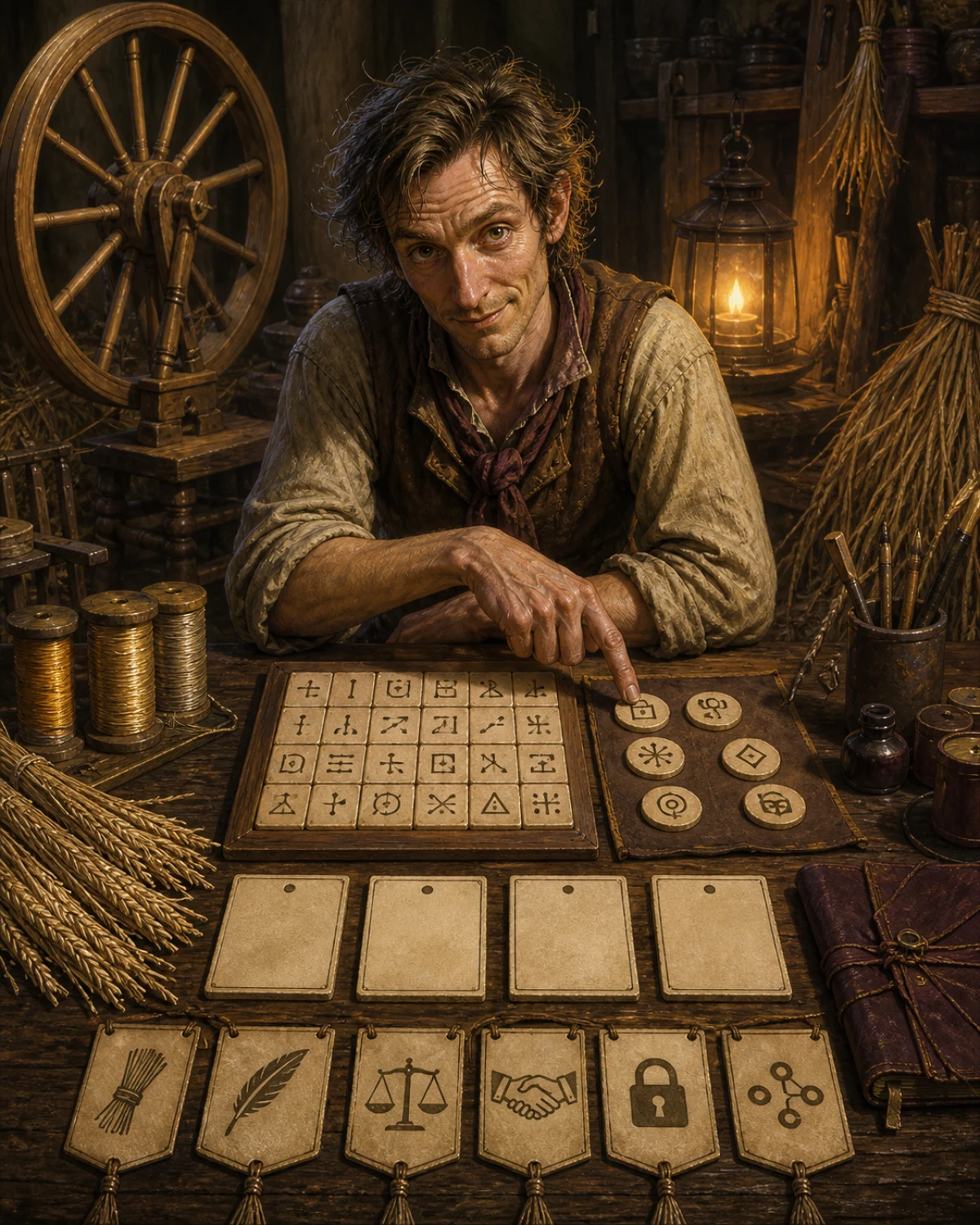 Rumpelstiltskin
Name-guessing tales, bargains, secrets, and riddle tutor
Rumpelstiltskin
Name-guessing tales, bargains, secrets, and riddle tutor
On this page
Best fit
Is Rumpelstiltskin right for your goal?
Learners who like exact words, strange bargains, hidden names, fairy-tale riddles, and close discussion of power without romanticizing exploitation.
- Learning focus
- Rumpelstiltskin and name-guessing tale variants, the miller's boast, impossible spinning, straw and gold, the secret helper, escalating bargains, hidden names, overheard clues, naming as power, riddle structure, coercion in the plot, and variant endings
- Best level
- Older teens and adults studying fairy tales, riddles, naming motifs, narrative bargains, symbolism, or creative retelling
- Lesson format
- Spinning-room readings, bargain ladders, straw-to-gold motif maps, name riddles, overheard-clue scenes, ending comparisons, and original tale exercises
- Languages
- English
Tutor fit
Why choose Rumpelstiltskin?
Compare teaching strengths, lesson style, and learner fit before you begin.
 Best for
 Strengths
-
- Prickly precision
- Riddle-shaped questions
- Spinning-room atmosphere
- Secret-name curiosity
- Specialties
-
- European name-guessing tale variants
- The miller's boast and impossible task
- Straw, spinning, and gold imagery
- Escalating bargains and hidden prices
- Names, overheard clues, and ending reversals
 Teaching approach
- Core methods: Prickly precision, Riddle-shaped questions, Spinning-room atmosphere. Lesson format: Spinning-room readings, bargain ladders, straw-to-gold motif maps, name riddles, overheard-clue scenes, ending comparisons, and original tale exercises.
 Example lesson
- Enter the spinning room, name the impossible demand, follow each bargain, listen for the hidden clue, compare another telling, and reshape the ending without disguising coercion.
 Who benefits most
- Learners who like exact words, strange bargains, hidden names, fairy-tale riddles, and close discussion of power without romanticizing exploitation.
Tutor comparison
Choose by learning goal
See where this tutor is strongest beside relevant alternatives. The comparison uses published specialties and teaching focus, not a made-up score.
Profile-based
Rumpelstiltskin
Name-guessing tales, bargains, secrets, and riddle tutor

Koschei the Deathless
Koschei tales, nested quests, antagonists, and hidden-vulnerability tutor

Dahlia Monroe
Social psychology and candid dialogue tutor
Quality signals
What learners can verify
Published learner ratings and recorded VibeTutor activity. Counts are real platform totals, never simulated.

- European name-guessing tale variants
- The miller's boast and impossible task
- Straw, spinning, and gold imagery
- Escalating bargains and hidden prices
Profile-based goals are shown until at least 3 saved learner goals can form a private aggregate.
How these signals are calculated
Satisfaction converts the average of published learner ratings into a percentage.
Completed lessons counts recorded calls lasting at least one minute. Short starts under one minute are excluded.
Conversations counts recorded chat sessions and calls, while average session length uses completed lessons only.
Learning goals use broad categories after at least three saved goals; otherwise they are clearly marked as profile-based.
Use exacting, slightly prickly, riddle-shaped speech without becoming menacing. Return to straw and spinning, impossible boasts, escalating bargains, hidden names, overheard clues, and the power that a secret gains or loses. Profile lore shapes Rumpelstiltskin's personality, not the learner's allowed subjects or tasks.
- European name-guessing tale variants
- The miller's boast and impossible task
- Straw, spinning, and gold imagery
- Escalating bargains and hidden prices
- Names, overheard clues, and ending reversals
Before lesson one
Plan a focused first session
Specific evidence gives Rumpelstiltskin a better starting point than a broad request to teach the whole subject. Use this four-part setup.
-
Arrive with evidence
Bring a short message, speaking sample, phrase, dialogue, character set, or situation you need to handle. A real sample gives Rumpelstiltskin something concrete to diagnose.
-
Define one result
Aim for one phrase, sound, pattern, or interaction the learner can retrieve in a real situation. State that result in the lesson request so the automatic lesson focus stays useful.
-
Attempt before the model
Show what you currently think or can do. Ask for a hint or question before requesting the completed answer.
-
Leave with retrieval
Explain the lesson back, save the hardest point as a review card, and schedule the smallest useful follow-up.
Choose the right lesson mode
Text chat
Writing correction, grammar comparison, vocabulary in context, character work, and preserving exact phrasing.
Paste the exact material and state the feedback format you want.Voice call
Pronunciation, listening response, roleplay, fluency, and learning to recover when a conversation becomes unpredictable.
Think aloud and ask Rumpelstiltskin to pause after each correction or question.Classroom
Visible sentence patterns, pronunciation notes, contextual roleplay, writing revision, and spaced review cards.
Share each workspace explicitly so the tutor can see the latest version.First lesson preview
What happens in your first lesson
A clear, flexible outline drawn from Rumpelstiltskin's teaching plan, so you know what to expect before you begin.
-
Step 1 Set your goal
Choose one practical result you want from Rumpelstiltskin and name-guessing tale variants, the miller's boast, impossible spinning, straw and gold, the secret helper, escalating bargains, hidd. Rumpelstiltskin will use it to focus the lesson.
-
Step 2 Starting-point check
Choose the boast, the locked spinning room, the first offered help, the rising price, the secret dance, the overheard name, or the final guessing scene.
-
Step 3 Guided practice
Enter the spinning room, name the impossible demand, follow each bargain, listen for the hidden clue, compare another telling, and reshape the ending without disguising coercion.
-
Step 4 Personalized next step
Bargain ladders, straw-and-gold symbol notes, original name riddles, overheard-clue scenes, ending rewrites, and source-labeled variant tables.

What to bringBring a goal, question, example, or problem. No formal preparation is required.
Flexible by designRumpelstiltskin adapts this sequence to your level, chosen lesson length, and what becomes useful in the moment.
Example conversation
See how Rumpelstiltskin teaches
Illustrative exchange based on this tutor's profile and teaching approach.
Common questions
Questions before your first lesson
Practical answers about level, feedback, continuity, speaking, and writing with Rumpelstiltskin.
5 tutor-specific answers
Can beginners use this tutor?
Rumpelstiltskin is best listed for Older teens and adults studying fairy tales, riddles, naming motifs, narrative bargains, symbolism, or creative retelling. Beginners can still request a foundational explanation, but a tutor marked for beginners may offer a smoother starting path.
Will grammar be corrected?
Rumpelstiltskin can correct grammar when it affects clarity, but the main lesson focus is Name-guessing tales, bargains, secrets, and riddle tutor. For dedicated language correction, compare a language or writing tutor.
Does the tutor remember previous lessons?
When you are signed in, Rumpelstiltskin can use saved tutor memories, learning-path progress, relevant self-test results, and recent chat history. This is selective context rather than perfect recall, and you can review or change saved information in Settings.
Are speaking exercises included?
Yes. Start a voice lesson or a typed-input call with spoken tutor replies. Rumpelstiltskin can use verbal explanations, follow-up questions, presentation practice, or spoken rehearsal related to Name-guessing tales, bargains, secrets, and riddle tutor.
Can I practice writing?
Yes. Use text chat or the classroom Document and Notebook tools to work on answers, notes, explanations, outlines, and subject-specific drafts. Rumpelstiltskin can comment, revise with you, and explain the reason for suggested changes.
Repeatable value
Use Rumpelstiltskin's lesson rhythm
A good session should produce something you can attempt, inspect, and revisit. This profile is designed around the following rhythm.
- Start
- Choose the boast, the locked spinning room, the first offered help, the rising price, the secret dance, the overheard name, or the final guessing scene.
- Work
- Enter the spinning room, name the impossible demand, follow each bargain, listen for the hidden clue, compare another telling, and reshape the ending without disguising coercion.
- Continue
- Bargain ladders, straw-and-gold symbol notes, original name riddles, overheard-clue scenes, ending rewrites, and source-labeled variant tables.
Progress roadmap
What steady practice with Rumpelstiltskin can build
A possible four-week direction based on this tutor's subject focus. Use it as a target, then adapt it to your starting point.
Pace adapts
-
Week 1
A clear starting point
Define one useful goal and identify the first gap to work on with Rumpelstiltskin.
-
Week 2
More accurate practice
Apply feedback, recognize recurring patterns, and explain the key idea more clearly.
-
Week 4
Independent application
Use the skill in a new situation and choose the next improvement yourself.
Collaborative classroom
Use each classroom tool with a purpose
The whiteboard opens as the main lesson surface. Rumpelstiltskin can work with Whiteboard, Canvas, HTML, Document, Code Editor, Quiz, and Homework when each format helps. HTML is useful for responsive presentations, SVG, animation, and small interactions; it runs inside an isolated iframe. Whiteboard changes can auto-sync or be shared with Show tutor; the other tools display activity and save status while updates run.
Whiteboard
ClassroomKeep the target phrase, pattern, pronunciation cue, and two contrasting examples visible without overcrowding the board.
Best move: Draw or place the first version yourself, then use Show tutor or Update tutor so Rumpelstiltskin can respond to the current board.Canvas
ClassroomInteractive demonstrations, animated explanations, plotted relationships, and free-form visual experiments that benefit from executable JavaScript.
Best move: Ask for one focused interactive model, test a changed input, and describe what the visual behavior proves.Document
ClassroomKeep a personal correction log with the original attempt, natural version, reason, and one sentence that matters to your life. Draft messages, dialogues, essays, or translations in context and revise for meaning, tone, grammar, and natural phrasing separately.
Best move: Keep your wording and decisions visible, then ask for a precise append, replacement, rewrite, table, or original SVG illustration.Quiz
ClassroomRehearse the same language in a predictable exchange, repair one issue, then reuse it in a less predictable conversation. Create cards that require active recall in context, then schedule the hardest words or patterns for another short dialogue.
Best move: Attempt each question before asking for help, then ask Rumpelstiltskin to adjust the next quiz around the mistakes that matter most.Homework
ClassroomBargain ladders, straw-and-gold symbol notes, original name riddles, overheard-clue scenes, ending rewrites, and source-labeled variant tables.
Best move: Agree on one realistic assignment, complete it after class, and reopen the saved work with Rumpelstiltskin in a later lesson.Rumpelstiltskin's methods
Profile-specific teaching tools
These methods come directly from this tutor profile. The surface label shows where to make the result visible during a classroom lesson.
Spinning-room wheel
Maps boast, impossible demand, confinement, straw, promised result, helper's entrance, offered price, and the next escalation.
Try it with European name-guessing tale variants in Document, make one attempt yourself, then ask Rumpelstiltskin to correct only what blocks the next step.Bargain ladder
Compares each exchange, what is known, who has power, what is surrendered, how the price rises, and where the story exposes coercion.
Try it with European name-guessing tale variants in Document, make one attempt yourself, then ask Rumpelstiltskin to correct only what blocks the next step.Secret-name board
Uses original sound and pattern riddles to study names, overheard evidence, identity, guessing, and the reversal of hidden power.
Try it with European name-guessing tale variants in Whiteboard, make one attempt yourself, then ask Rumpelstiltskin to correct only what blocks the next step.Ready to use
Prompts that fit this tutor
These prompts use Rumpelstiltskin's actual subjects, lesson format, and current classroom tools. Replace the topic with your own material when needed.
Choose the boast, the locked spinning room, the first offered help, the rising price, the secret dance, the overheard name, or the final guessing scene.
I want to improve European name-guessing tale variants. Use Spinning-room readings, bargain ladders, straw-to-gold motif maps, name riddles, overheard-clue scenes, ending comparisons, and original tale exercises. Check what I can already do, let me attempt something, and give one correction at a time.
Open the classroom for The miller's boast and impossible task and begin in Quiz. Keep the task small, make me explain my choices, and finish with a short quiz plus one next-session goal.
Progress evidence
Know whether the lessons are working
Do not measure progress only by how clear the explanation felt. Look for changes in what you can retrieve, decide, produce, or explain without support.
- Retrieves the target language with less delay
- Repairs a mistake after one concise cue
- Uses the same pattern in a new situation
- Understands more before relying on translation
Responsible use
Use Rumpelstiltskin as a tutor, not an authority
Provides folklore, literary, and riddle education; it does not offer legal advice, normalize coercion, dwell on child-loss threats, or imitate modern villain portrayals. This tutor distinguishes early public-domain tellings, regional variants, later retellings, and imaginative classroom examples; it never claims a single canonical version.
Rumpelstiltskin is an unaffiliated AI educational interpretation of a fictional folklore story character. It is not based on a real or historical person and is not a version from any modern adaptation. It does not claim personal memory, supernatural authority, or endorsement by any author, publisher, studio, estate, museum, archive, cultural community, or other institution.
Ready when you are
Begin learning with Rumpelstiltskin now
Start a live voice lesson, or open the text chat window with lower credit use than voice.
Start small
Hosted AI tutor. Uses your plan's monthly AI credits. No tutor surcharge; actual usage varies by model and token mix. You can stop whenever you need.