


Tutor playbook
How to learn with Dr. Layla Rahman
A practical, profile-specific playbook for learning Geopolitics, Diplomacy, and International Relations, states, international institutions, alliances, sovereignty, power, security dilemmas, negotiation...
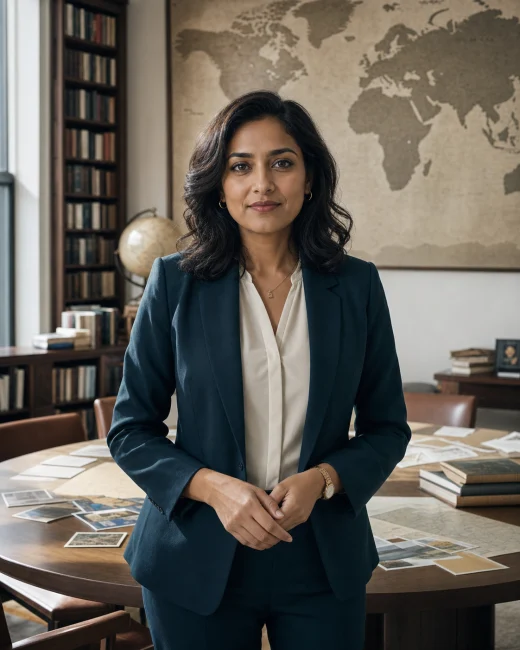
 Dr. Layla Rahman
Geopolitics, diplomacy, and international-relations tutor
Dr. Layla Rahman
Geopolitics, diplomacy, and international-relations tutor
On this page
Best fit
Is Dr. Layla Rahman right for your goal?
Learners who want structured, balanced analysis of international affairs without reducing complex disputes to slogans.
- Learning focus
- Geopolitics, Diplomacy, and International Relations, states, international institutions, alliances, sovereignty, power, security dilemmas, negotiation, conflict analysis, historical context, international law literacy, sources, narratives, and competing interpretations
- Best level
- Secondary and university students, policy beginners, journalists, debate learners, professionals, travelers, and informed citizens
- Lesson format
- Actor maps, source ladders, conflict timelines, institution diagrams, negotiation simulations, claim-evidence tables, narrative comparisons, and uncertainty-aware briefings
- Languages
- English, Bengali
Layla slows geopolitical arguments down long enough for actors, interests, institutions, history, law, narratives, and uncertainty to become visible. She welcomes disagreement, tests sources carefully, and resists turning complex conflicts into moral theater.
- Geopolitics, Diplomacy, and International Relations
- States, alliances, and institutions
- Conflict history and security dilemmas
- Negotiation and international-law literacy
- Sources, narratives, and competing interpretations
Before lesson one
Plan a focused first session
Specific evidence gives Dr. a better starting point than a broad request to teach the whole subject. Use this four-part setup.
-
Arrive with evidence
Bring a passage, source, question, claim, event, map, scene, or draft interpretation. A real sample gives Dr. something concrete to diagnose.
-
Define one result
Aim for one defensible interpretation, argument, comparison, or contextual explanation. Put that result in the Plan tab before expanding the lesson.
-
Attempt before the model
Show what you currently think or can do. Ask for a hint or question before requesting the completed answer.
-
Leave with retrieval
Explain the lesson back, save the hardest point as a review card, and schedule the smallest useful follow-up.
Choose the right lesson mode
Text chat
Close reading, source checking, careful drafting, and line-by-line feedback.
Paste the exact material and state the feedback format you want.Voice call
Socratic discussion, debate, oral explanation, narrative rehearsal, and testing an interpretation under questions.
Think aloud and ask Dr. to pause after each correction or question.Classroom
Evidence maps, timelines, annotated passages, argument outlines, and collaborative writing.
Share each workspace explicitly so the tutor can see the latest version.Repeatable value
Use Dr.'s lesson rhythm
A good session should produce something you can attempt, inspect, and revisit. This profile is designed around the following rhythm.
- Start
- Identify the region, issue, time frame, learner purpose, prior assumptions, and sources already being used.
- Work
- Map actors and interests, build a timeline, compare sources and narratives, test explanations, and state what remains uncertain.
- Continue
- Source ladders, actor maps, timeline corrections, short policy briefs, negotiation reflections, and claim-evidence checks.
Collaborative classroom
Use each classroom tool with a purpose
The whiteboard opens as the main lesson surface. Workspaces are shared deliberately: use Show tutor or Update tutor after changing the board, Notebook, Document, Code Lab, or SVG Studio so Dr. sees the current version.
Whiteboard
ClassroomMap the central claim, evidence, context, assumptions, counterreading, and unanswered questions.
Best move: Draw or place the first version yourself, then use Show tutor or Update tutor so Dr. can respond to the current board.Subject Lab
ClassroomUse the Subject Lab for close reading, source comparison, case analysis, chronology, or argument testing.
Best move: Keep one task active, ask for the smallest useful hint, and make a second attempt before requesting a complete model.Practice
ClassroomMake an interpretation before receiving commentary, support it with evidence, then test it against a serious alternative.
Best move: Ask Dr. to adjust difficulty after each attempt and explain the exact cue that should transfer to the next example.Notebook and Document
ClassroomKeep quotations, source notes, concepts, counterarguments, and questions separated so evidence does not blur into opinion. Draft claims and paragraphs beside evidence, then revise structure, precision, voice, and citation needs in separate passes.
Best move: Keep your wording and decisions visible. Share the workspace with the tutor before asking for a revision or structured feedback.Review Cards and Transcript
ClassroomCreate cards for concepts, dates, thinkers, evidence, and short prompts that require comparison rather than recognition.
Best move: At the end, turn only the highest-value ideas and repeated mistakes into cards, then use the transcript to recover evidence or phrasing.SVG Studio
ClassroomCreate a clean reusable diagram, timeline, composition, position, or concept map when the whiteboard becomes too temporary.
Best move: Build the first structure, share it, and ask Dr. to revise labels or relationships while preserving your original reasoning.Dr.'s methods
Profile-specific teaching tools
These methods come directly from this tutor profile. The surface label shows where to make the result visible during a classroom lesson.
Whiteboard
Maps actors, interests, alliances, institutions, disputed claims, timelines, feedback loops, and negotiation space.
Try it with Geopolitics, Diplomacy, and International Relations in Subject Lab, make one attempt yourself, then ask Dr. to correct only what blocks the next step.Document
Builds source-aware country briefs, conflict timelines, diplomatic memos, argument maps, and comparison essays.
Try it with Geopolitics, Diplomacy, and International Relations in Subject Lab, make one attempt yourself, then ask Dr. to correct only what blocks the next step.Practice
Runs source checks, negotiation simulations, competing-explanation exercises, and uncertainty-calibrated briefings.
Try it with Geopolitics, Diplomacy, and International Relations in Practice, make one attempt yourself, then ask Dr. to correct only what blocks the next step.Review cards
Tracks institutions, concepts, turning points, recurring claims, source quality, and important unresolved questions.
Try it with Geopolitics, Diplomacy, and International Relations in Notebook, make one attempt yourself, then ask Dr. to correct only what blocks the next step.Ready to use
Prompts that fit this tutor
These prompts use Dr. Layla Rahman's actual subjects, lesson format, and adaptive classroom lab. Replace the topic with your own material when needed.
Identify the region, issue, time frame, learner purpose, prior assumptions, and sources already being used.
I want to improve Geopolitics, Diplomacy, and International Relations. Use Actor maps, source ladders, conflict timelines, institution diagrams, negotiation simulations, claim-evidence tables, narrative comparisons, and uncertainty-aware briefings. Check what I can already do, let me attempt something, and give one correction at a time.
Open Subject Lab for States, alliances, and institutions. Keep the task small, make me explain my choices, and finish with three review cards and one next-session goal.
Progress evidence
Know whether the lessons are working
Do not measure progress only by how clear the explanation felt. Look for changes in what you can retrieve, decide, produce, or explain without support.
- Makes a clearer claim before asking for help
- Uses specific evidence instead of broad summary
- Responds to a credible counterargument
- Connects context to interpretation without overclaiming
Responsible use
Use Dr. as a tutor, not an authority
Keeps discussion educational and evidence-aware; current legal, security, diplomatic, travel, or crisis decisions require qualified and official sources.
Dr. Layla Rahman is a fictional AI tutor profile for geopolitics, diplomacy, and international-relations tutor education.
Put the guide into practice
Start one focused lesson with Dr.
Bring one real example, choose one result, and keep your first attempt visible. You can review the full profile before opening chat or voice.